Halāl is an Arabic word meaning permissible according to Islamic doctrine. For Muslims, or those who have converted to God, it is a guideline for all aspects of life. Not only food, but also actions, behavior, clothing, and everything else is based on what is permitted by God. Halal certification is only displayed on products that have been approved as conforming to Islamic law after examining the raw materials, manufacturing process, and product quality.
rushing recklessly: 一心不乱, 一意専心, 勇往邁進, 直情径行, 暴虎馮河, 匹夫之勇
Juji ISHII: He was the first person to establish an orphanage in Japan and is known as the "father of child welfare." In 1880, he was imprisoned in Kagoshima for 51 days on suspicion of assassinating Minister of the Right, Tomomi Iwakura. During his imprisonment, he was inspired by the story of Takamori SAIGO's reclamation of Yoshino Village, and upon his release, he immediately established the "Gosshi Company" with four friends. They reclaimed the wasteland along the Omaru River in Takanabe Town. Juji, who could not give up his desire to become a doctor, burned his medical books and withdrew from medical school in 1889, following the scripture that "a man cannot serve two masters." At this time, he resolved to dedicate himself to child welfare and education. The same year he burned his medical books, the Constitution of the Empire of Japan was promulgated in Japan. As Japan aimed to become a modern nation, its rapid overstretching created distortions, contradictions, and poverty. As a result, the number of residents at the facility continued to increase. Until then, the facility had been obliged to collect membership fees from supporting members, but it stopped recruiting members because it felt that this was against God's teachings, and it was run by donations. In 1891, the facility rescued 93 children affected by the Nobi earthquake that struck the Nagoya area. In 1892 and 1893, Okayama City experienced major floods for two consecutive years, and the children at the facility were called in to help with flood prevention, rescue, feeding, and cleaning up after the disaster, which earned the gratitude of the townspeople. In 1906, a severe crop failure caused by cold weather in the Tohoku region led to many farmers going bankrupt and being dispersed. The organization began providing relief to the disaster area, sending a total of 825 people to Okayama in six trips for protection. It is said that the number of children in the orphanage that year reached 1,200.
【Product name】
Oh! Miyazaki Zucchini
Cucurbita pepo L. 'Melopepo'
Saito City, Miyazaki Prefecture, Nishimera Village, Koyu District (JA Saito, JA Miyazaki Prefecture Economic Federation)
Italian "zucca" "zucchini" from a small Miyazaki Pumpkin.
On May 20, 2022, Miyazaki Prefecture was closed to traffic on the national highway in Nakao, a western city where the slope (the slope where the soil was scraped off and the slope where the soil was piled up. The slope on the side of the embankment) collapsed. The regulation of No. 219 (the total distance is 170.5 km, which is a general national road from Chuo Ward, Kumamoto City, Kumamoto Prefecture to Miyazaki City, Miyazaki Prefecture) has been lifted. It seems that it will take several weeks to fully recover, but it seems that a certain level of safety has been ensured. The national highway is the main route connecting Saito City and Nishimera Village, and it seems that local medical and tourism officials have expressed relief. Saito Agricultural Cooperative is located in the center of Miyazaki prefecture, and has jurisdiction over Saito City and Nishimera Village. In Saito, which is blessed with abundant water and soil and a warm climate, the plains spread out in the basins of the Hitotsuse, Sanzai, and Mino rivers, and vegetables, fruit trees, and livestock are flourishing. In fruit trees, it is a production center of ripe mangoes known by the brand name of "Taiyo no Tamago". Livestock is also flourishing, and at the National Wagyu Ability Co-Promotion Society held in 2012, the producers in the jurisdiction were born in Saito and shined at the top of the honor award for beef raised in Saito, greatly contributing to the second consecutive victory of Miyazaki Japanese beef Cow in Japan. Miyachiku Co., Ltd. (Omuta, Takasaki Town, Miyazaki City, Miyazaki), which sells Miyazaki beef, has been certified as "Halal" (Nonprofit organization Japan Halal) in accordance with Islamic rules in order to expand exports of beef produced in Miyazaki Prefecture. When exporting as a halal certified product to legally operated countries by the association (Karita, Sumiyoshi Ward, Osaka City, Osaka Prefecture), it is issued by a domestic certification body officially approved by the halal certification body of the exporting country. Halal certification is required. Others are not recognized as halal certification products. The association's halal certification is mutually approved by the halal certification bodies of Malaysia, Indonesia, Singapore and Gulf countries (UAE, Saudi Arabia, etc.). Halal certification audits conducted by the Association are conducted in accordance with the standards set by each institution. Therefore, it is effective when exporting as Halal certified products to those countries. Other non-Islamic and Islamic areas It seems that the halal certification system is not legally operated and it is basically unnecessary for the state to approve the certification body. It is necessary to obtain GSO2055-2 certification from the Gulf Countries Certification Body (GAC) and audit for GSO. UAE Approval Body (ESMA) Halal Certification Body Accreditation, GSO Audit Required. Malaysian Government Halal Certification Body (JAKIM) Mutual Approval. Indonesia Indonesia Urama Council (MUI) Mutual Approval. Singapore Islamic Council (MUIS) Obtained mutual approval. Obtained mutual approval from the Central Islamic Organization of Thailand (CICOT). Obtained mutual approval from the Taiwan Seishin Industrial Quality Assurance Association (THIDA). Obtained mutual approval. It seems that it will be built in April 2024. Miyachiku Co., Ltd. also invests and accepts a wide range of prefectural beef. It seems that it aims to reduce costs and improve quality by expanding sales channels to Muslims in Japan and abroad, which were almost undeveloped, and performing everything from production to processing within the prefecture. In addition, the view of the Japan Halal Business Association is that when looking at exports from Japan, the cost is high and attractive to the partner market, considering the halal certification cost at the time of manufacturing, HACCP compliance, labor costs, transportation costs, etc. can not see. Many companies tend to think about sales channels after making products, and mismatches in the halal business market occur and end up halfway. Although there are Japanese original products and raw materials, it is difficult to expand the scale. Logistics costs will be high and exports in small lots will be less competitive. In Japan's food industry, the domestic market is maturing and the market size will shrink in the future. For food and raw material manufacturers and food service companies, developing the Asian market is the key to growth. As for vegetables, winter and spring peppers are one of the leading production areas in Japan, and Saito peppers are mainly cultivated in a greenhouse forcibly molded, and the main shipping time is from October to June of the following year. In addition, it seems that facility horticulture such as green pepper, which is a medium-sized color with vivid red, yellow, and orange, and outdoor vegetables such as bitter melon are being actively produced. In addition, sweet corn has the largest acreage in Miyazaki prefecture, and seems to be positioned as one of the leading early production areas not only in the prefecture but also in the whole country. Within the JA jurisdiction, complex management such as early paddy rice, institutional horticulture, open-field vegetables, and livestock is being carried out, but it seems that it occupies one of them. I heard that sweet corn cultivation in the JA jurisdiction began in 1963 when Mr. Tahara, a producer in the Tonokoori Nagasono district, worked on open-field cultivation in a field of 5 ares. At that time, its sweetness was well received, and it seems that it was sold at a high price of 10 yen per bottle at the producer's take-home price. Since then, several producers have expanded the planted area mainly in the Nagasono area and have been cultivated in paddy fields, so it is considered to be a promising crop for conversion, and both the producer and the planted area seem to have increased sharply. In 1972, the JA Saito Sweet Corn Subcommittee, a producer subcommittee under the JA jurisdiction, was established. Since the establishment of the subcommittee, the number of members and acreage has increased, and it seems that the price has continued to be sluggish due to the rapid increase in shipment volume due to the concentration of harvest time. Therefore, as countermeasures against these, cherry tomatoes are to be tackled for early evolution cultivation that makes use of the warm and sunny winter and spring weather conditions peculiar to the southwestern warm regions, and to equalize the harvest time, early evolution and disperse the labor force. It seems that they have actively promoted cultivation and tunnel cultivation, established cultivation techniques for each type of crop, and built an advanced and exemplary production area system while applying diligent application. Now, by making full use of green house cultivation, mini greenhouse cultivation, tunnel (large and small), and open field cultivation, the seeding period is staggered, and the shipping period is from May to June, especially the peak is May. It seems to be from the middle to the beginning of June. The main shipping destinations are Tokyo, followed by Nagoya and Osaka, and it seems that they are widely shipped to Tohoku and Hokuriku. It seems that they are also working to expand consumption in the region, such as holding sales promotion events at the JA's direct sales office and providing school meals at local elementary schools. In addition, in order to understand consumer needs, an exhibition field was set up by the Saito Sweet Corn Subcommittee, and each year, various tests were conducted according to demand, information was collected, production area inspections and sales promotion activities were conducted for sales promotion, and cultivation techniques were acquired. It seems that they are continuing to focus on sales, such as developing new markets. At the start of shipment every year, we hold a meeting to unify the standards among producers, and producers go around the fields every day to ship high-quality and timeless sweet corn. It seems. The quality of sweet corn deteriorates quickly, so it seems that they are especially careful to maintain freshness. Producers are highly conscious of consumer needs, and in order to meet demand inside and outside the prefecture, producers harvest from around 1 to 2 am, sort and box the fruits, and in the morning of the day. It seems that they are working in the busy busyness of shipping. Also, in recent years, it seems that they are trying to reduce material costs by using returnable containers that can be used repeatedly for shipping and transportation. In addition, although mulch is cultivated, the use of biodegradable mulch that can be reduced to soil is expanding from polyethylene mulch, and it seems that they are constantly striving to save labor and create an environment-friendly production area. On the other hand, at the cultivation site, in addition to the outbreak of difficult-to-control pests of aphids and corn, damage to birds and beasts such as crows, corn, and raccoon dogs, there are many problems of meteorological disasters such as frost damage in winter and gusts in early spring. Regarding, it seems that the Miyazaki Agricultural Mutual Aid Association is trying to maintain the production area by joining the sweet corn agricultural mutual aid. In 2022, the 50th anniversary of the establishment of the JA Saito Sweet Corn Subcommittee will be celebrated, so it seems that a total of 300 people, including related organizations, are planning to hold a celebration. Saito City is about 40 minutes by car from downtown Miyazaki and about 50 minutes from Miyazaki Airport. Once prospered as the capital of ancient Hinata, many folklore sites appearing in "Kojiki" and "Nihonshoki" remain in the city, and the Saitobaru Burial Mounds, a national special historic site where more than 300 ancient burial mounds, which are the largest in Japan, are gathered. It is a town full of historical romance. In addition, the Saitobaru Plateau is famous as one of the leading tourist destinations in the prefecture, with 2,000 cherry blossoms and about 300,000 rape blossoms in spring and about 3 million cosmos in autumn. Nishimera Village, Koyu District is the smallest municipality in Miyazaki prefecture. 96% of the area is a mountainous area of forest, facing the 1,000-meter-class Mt. Ichifusa, Mt. Ishidou, and Mt. Tenho(Merasanzan) . The great municipal mergers of the Heisei era; series of large-scale municipal mergers carried out between 1995 and 2010 under the temporary Special Mergers Law "Meeting" was established. However, when the village conducted a merger intention questionnaire to the villagers, it seems that it is better not to merge, but it has reached about 80%. In response to this, the village seems to have decided to go on the path of independence. On February 9, 2021, the JA Saito Zucchini Subcommittee received the Governor's Award and the Ministry of Agriculture, Forestry and Fisheries Kyushu Regional Agricultural Administration Bureau Award at the "2020 Miyazaki Prefecture Agricultural and Horticultural Special Products Comprehensive Award". An award ceremony is held in Miyazaki City every year, but a certificate of commendation is given at the house of Chairman Miura of the subcommittee to prevent new coronavirus infections. In 2014, the Zucchini Study Group was established, and the following year, in 2015, the group was established. At the beginning of cultivation around 1982, it was cultivated by the ground crawling method, but there are problems such as scratches on the fruits, so it seems that it has been carried out by the lifting method since around 1989. Then, the coloring improved, and it seems that it led to the improvement of quality and the increase of yield. Compared to other crops, zucchini has a lower cost and is easier to cultivate, so the number of members has increased year by year, and it seems that 110 producers belonged to the group by last year. In addition, it seems that the subcommittee has been cooperating with vegetable sommeliers for several years to carry out PR activities through food education activities for elementary and junior high schools in the city, sales promotion outside the prefecture, and fairs. It seems that the award was given in recognition of its active efforts to create production areas in such areas. Chairman Miurabe has strongly stated that he would like to continue to actively introduce new dishes and promote sales in order to raise the name of Zucchini. We are also looking forward to it, and we are full of feelings of fighting spirit. By March 18, 2022, the JA will be grateful to healthcare professionals who are responding to the spread of the new coronavirus while in a pandemic. 700 curry lunches using locally produced ingredients are distributed to 20 facilities. Is it because of gratitude and respect for the workers who value the connection and devote themselves to community medicine? It's a great initiative and we can sympathize with it. In addition, the Miyazaki Prefecture Fruit and Vegetable Consumption Expansion Promotion Council aims to promote the production and distribution of fruits and vegetables in the prefecture. Since the inauguration of the consultation in 1979, he has been engaged in various enlightenment projects. It seems that the labor shortage due to the decrease in the number of vegetable sales farmers and the aging of the farmers, the interruption of the inheritance of exemplary farmer techniques, and the increase in costs due to the soaring material prices will continue in the future. In the horticultural sector, the share of agricultural output is gradually declining, which seems to be one of the issues of Miyazaki Prefecture agriculture. In recent years, the total number of farmers and the working population of agriculture seem to be decreasing due to the influence of the declining birth rate and aging population. In addition, the retirement of elderly farmers has led to a decline in agricultural productivity, an increase in the rate of abandoned cultivated land, and a loss of agricultural technology by skilled farmers, leading to weakening and decline of production areas. How to solve the overall decline in vegetable supply is one of the major issues related to vegetable production, processing, and distribution. There seems to be room for full-scale discussion on how effective the introduction of smart agriculture is as one of the solutions. Looking at vegetables in Miyazaki Prefecture, we have established a year-round supply system for fruit vegetables such as cucumbers, green peppers, and tomatoes by promoting production that makes the best use of regional characteristics such as mountainous areas, hilltop fields, and flat coastal areas. , Root vegetables such as burdock, leaf vegetables such as chinase chive and spinach, etc., have been formed throughout the prefecture by taking advantage of conditions such as warm climate, altitude difference, and garlic chives, making it one of the leading vegetable producing areas in Japan. Smart agriculture can be unmanned, labor-saving, scale-up, and productivity-enhancing by introducing cutting-edge technologies such as information and communication technology and robots into the agricultural field, helping to solve the agricultural labor shortage, and using AI. It is said that the skills of skilled farmers may be handed down. On the other hand, smart agriculture has problems such as unfinished machinery and technology and uncertainties about the cost-effectiveness of introduction. The decrease in the number of contractors and the aging of the population are accompanied by the loss of agricultural technology and knowledge, and there is a great concern that the agricultural productivity will decline. However, in order to introduce the latest technology to the production site, it seems that there are many issues such as the guidance system and financial measures, in addition to the preparation status such as the preliminary knowledge and utilization ability of the equipment on the receiving side.
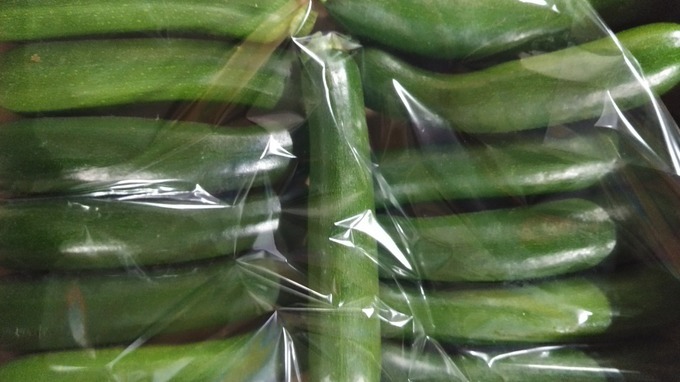
The JA established the Zucchini Study Group in 2014, and the subcommittee was established in 2015 the following year. At the beginning of cultivation around 1982, it was cultivated by the ground crawling method, but there are problems such as scratches on the fruits, so it seems that it has been carried out by the lifting method since around 1989. Then, the coloring improved, and it seems that it led to the improvement of quality and the increase of yield. Also, compared to other crops, zucchini is cheaper and easier to cultivate, so it seems that the number of members is increasing year by year. Received the Governor's Award and the Ministry of Agriculture, Forestry and Fisheries Kyushu Regional Agricultural Administration Bureau Award at the "Miyazaki Prefecture Agricultural and Horticultural Special Products Comprehensive Award" on February 9, 2021.
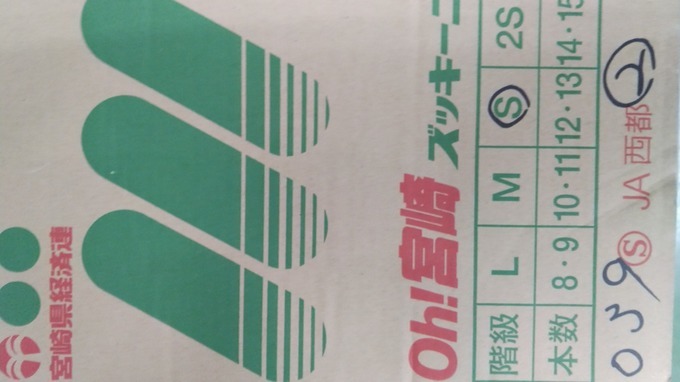
It is a plant of the Cucurbitaceae family, and the immature fruits that have just bloomed are edible. Similar to cucumbers and white melons, but with a light taste and can be used for a variety of dishes. Small young fruits can also be used as flower zucchini. Since it can be produced in a short period of time, it seems to be incorporated into the crop rotation system of fruits and vegetables cultivated in greenhouse. Also, unlike other pumpkins, neither the main stem nor the branches grow, and the flowers arrive from the root of the plant and eventually become fruits. In zucchini, male flowers bloom first, and then female flowers bloom, but it seems that male flowers may bloom well after that depending on the variety.
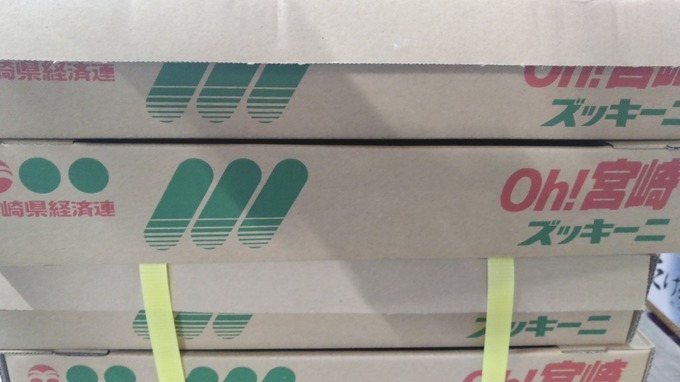
Generally, the size on the market is about 15 to 20 cm, and it seems that it actually grows up to about 1 m. You can also eat large-grown ones, and if you slice them into slices and sauté them, the sweetness will increase and they will be very delicious. However, this is not suitable for raw food because it has a lot of fiber and is hard. And although it has a short history in Japan and began to spread around 1980, it is bustling as one of the fashionable and popular vegetables in the vegetable garden.


コメント
コメントを投稿