Dr. Shigeo Nagatomo (1901-1974): Aggregation, Degree Theory, Proportion, German Agricultural Management, Neoliberal Equilibrium Theory of the Thünen System, Founding a New School, Laying the Foundation for the Development of Modern Developmental Agricultural Management. Johann Heinrich von Thünen (1783-1850), Representative Works, Isolated Countries on Agriculture and National Economy: A Study on the Agricultural Effects of Grain Prices, Land Fertility and Taxes, 1826: Three field system in Southern Manchuria Shiki Agriculture, 1936 : Manchurian Farm Management and Pioneering Agriculture, 1944 : Farm Management and the Significance of Dispersed Cultivated Land Collectivization, 1957
Thunen's Agricultural Location Theory: As a farmer, Thunen came up with this theory while thinking about what kind of farmland should be cultivated in order to maximize profits. J.H. von Thunen (1826) The Isolated State on Agriculture and the National Economy. He considers the selling price, the wages, and the transportation costs as raw materials, of which the transportation costs, which are determined by the distance from the market, are the factors attributable to the land itself. For urban consumers, the value of each type of agricultural product is the same everywhere. Value of land = Reflected in land rent, difference from land rent in the furthest edge of the market area = positional difference in land rent, transportation costs, land rent, management method. Only low-cost (= extensive). If you don't manage it, the market price will be in the red. Farmers who are closest to the market can produce high-priced crops through intensive management that takes "time and effort" as much as they can save on transportation costs. For example, rice cultivation, which is representative of extensive low-cost agriculture in Japan, is most advantageous if it is grown and sold in the immediate vicinity of the market as it does not incur transportation costs. However, no matter how intensively it is grown, rice cannot be sold at a high price due to the high distribution volume. In the immediate market, there is no choice but to switch to agricultural management (horticultural crops) where higher prices can be expected. Agricultural management system: The rate of decrease in rent bearing capacity is steeper for intensive farming and gentler for extensive farming.
Released by TAKII & CO., LTD. Around 1975. Small tomatoes: petit tomatoes have become widely known. However, although it was made in earnest in the early Showa era, it didn’t go into mass production.
JA Osuzu has production areas such as Kawaminami Town, Koyu District, and Tsuno Town, which are representative of Miyazaki Prefecture. However, due to the aging of farmers and the spread of crops (lettuce, sweet corn) that compete with carrots in cropping season, there are 57 members (average age 48) and the cropped area has decreased to 89 ha. In many cases, many farmers cultivate carrots in the area as a follow-up crop to rice, and the cultivar for fruit juice is "Kuroda Gosun'' by the Nagasaki Gosun Ginseng Incubation Association because of its color tone. It seems to be From mid-August to mid-September, when the rice harvest is finished, 40,000 to 45,000 grains are sown per roll (row width 120 cm, spacing 7 cm, planting 4 rows), and harvesting starts in early December. It seems that it will be completed by the beginning of March. The actual yield was 3.7 to 3.8 tons against the target of 5 tons per roll (management policy of the promotion center). In addition, most of the harvested carrots are sold to Miyazaki Prefectural Agricultural Cooperative Fruits Juice Co., Ltd. through systematic joint sales through each agricultural cooperative and Keizairen. According to the standards set by the Miyazaki Prefecture Horticultural Brand Inspection Association, it must be bright red, have a sugar content of 7.5 degrees or more, be free from toxic contamination such as residual pesticides, have a length of 3 cm to 8 cm or less, and a length of 10 cm to 23 cm. It seems that it is only defined as a healthy fruit and does not have a class division like market shipment). As a result, the post-harvest adjustment work of the farmers is considerably simplified, and it seems that the shipment is also loaded with soil in a 1-ton container rented by Miyazaki Prefectural Agricultural Cooperative Fruits Juice Co., Ltd. These standards and the simplification of shipping adjustments have reduced the working hours per roll to about 84 hours, compared to 237 hours in Chiba Prefecture, which is also a carrot-producing area in winter. This seems to make it possible to deal with processing raw materials at a level below the market price. Miyazaki Prefecture Agricultural Cooperative Fruits Juice Co., Ltd. has factories in Koyu District (headquarters factory), which is the raw material production area for carrots, and Miyakonojo and Kobayashi districts. Imported in a 1t container. From December to March, which is the harvest season for winter carrots, raw carrots are received, washed, sorted, blanched, refined, and stored frozen as "carrot puree." and sold to other beverage manufacturers. In addition, the company uses 5% of the carrots procured as raw materials for its own brand products, and the rest is used as raw materials for brand products of beverage manufacturers with which it has an Original Equipment Manufacturing (Manufacturer) contract. In addition, many winter carrot production areas in Miyazaki Prefecture ship a part of the harvested amount for processing raw materials on the premise that they are generally shipped to the market for raw consumption. Agricultural cooperatives and other related entities work together to determine the planting area based on the procurement plan of the user, Miyazaki Prefecture Agricultural Cooperative Fruits Juice Co., Ltd., and adopt a system for procuring harvested products. In this way, in a system that is highly dependent on transactions and closely linked, there is no problem if production is carried out according to plan, but if crop conditions change due to unseasonable weather, it is likely to lead to raw material procurement problems. It seems that there is also. JA Osuzu is located along the Hyuga Sea in the middle of Miyazaki Prefecture. To the west you can see Mt. Osuzu, the origin of the name of JA. The land of Osuzu, which is nurtured by the tropical sun and greenery, produces a variety of vegetables and fruits throughout the year. It seems that the agricultural and livestock products produced here are shipped not only within the prefecture but also all over the country. Osuzuyama Prefectural Natural Park centered around Mt. Osuzu, and a group of waterfalls including Yatogi Falls are located within the jurisdiction. On the other hand, there are fishing ports in Kawaminami and Tsuno on the coastline, and seafood is abundant. Tsuno's sea urchin'' and Kawaminami's "Lagocephalus wheeleri Abe, Tabeta & Kitahama(Unlike tiger puffer fish, it has a supple white flesh similar to chicken tenderloin. If you lightly sear it, grill it, and eat it with ponzu sauce, the elegant flavor will spread in your mouth.)'' are particularly famous, and I sometimes eat them. There is also a surfing center in Ikurahama Nature Park, and the straight coastline seems to be one of the hot spots for surfers both inside and outside the prefecture. Also, Tsuno wine, which is brewed from locally produced grapes, has received high praise overseas and is very popular, and during the sales period at Tsuno Winery, which overlooks the Hyuga Sea, it is crowded with many customers. The Miyazaki Prefecture brand certified crops seem to strive to reduce pesticides through thorough cultivation management such as the use of insect nets, insect repellent sheets, and natural pesticides. In addition, the food development laboratory of Keizairen conducts regular inspections of residual pesticides to check whether pest control is appropriate. Participate in the ODD movement (appropriate application of organic matter, deep cultivation, soil diagnosis). Do not apply excessive fertilizers, and apply appropriate fertilizers necessary for the growth and harvesting of crops. Cherry Tomatoes: Acquired brand production area certification on October 22, 2001, product brand name: "Miyazaki Eco Cherry Tomatoes", Mini Tomato Subcommittee 35 producers Area 12.5 ha. Mini Tomato Group 11 producers Area 7.4 ha. The JA Osuzu mini tomato section usually begins shipping Cherry Tomatoes in late September. The variety is Summer Senka Cherry Tomatoes. It seems to be characterized by a glossy dark red color and a beautiful spherical fruit shape. The 2020 crop escaped damage from the typhoon, and it seems that the fine weather continued and the growth was good. In the subcommittee, 36 people planted Summer Senka Tomatoes and Kosuzu Cherry Tomatoes on 13.5 hectares. The first peak is around mid-November, and it seems that 2021 will reach its peak in April-May. According to Takii & Co., Ltd., the cherry tomatoes "summer senka tomatoes" to be introduced this time is a deep red and glossy fruit color. The fruit color is bright red and seems to have a beautiful luster. The fruit weight seems to be 15 to 20 g. The fruit shape is a beautiful sphere and should be well-matched. It has a high sugar content and seems to have a particularly good taste. The sugar content is 8 to 10 degrees, which is stable from the lower stage to a higher sugar content than "Coco cherry tomatoes", and it seems that the taste is particularly excellent due to the fine meat quality. Also, it is easy to cultivate and it seems that there are few glasses. The grass is medium-strength and gentler than "Coco cherry tomatoes", and it is easy to cultivate with less occurrence of abnormal main stems (glasses). From Takii Seedling Co., Ltd., in principle, the market is cultivated in a facility. It is suitable for all cropping types such as controlled cultivation, but it seems that it is always better to carry out rain shelter cultivation (facility cultivation) in order to prevent fruit cracking and improve quality in economic cultivation. In long-term cultivation, it seems that the amount of nitrogen fertilizer applied to the original fertilizer is 10 to 15 kg per 10 a when a large amount of original fertilizer is used for long-stepping of 15 or more stages. The nitrogen component is Coco medium: Coconut fiber is crushed into small pieces to remove salt. It looks like soil, but it feels soft to the touch and can contain more air than soil. It contains a lot of air. It is important to include it, and it seems that the roots can grow quickly by supplying a large amount of oxygen to the rhizosphere. Rock wool is another famous medium that uses a solid medium for hydroponic cultivation. It is highly breathable and seems to be one of the most suitable mediums for hydroponic cultivation. The raw material is slag (when the target metal is obtained from ore or crude metal, vein stones and impurities are separated from the metal in a molten state. The amount is increased by 10 to 20% from mainly siliceous oxide melts), rocks, and limestones produced by adding a solvent for the purpose, which are melted at high temperature and fibrous. The best rootstock is a variety that has stamina until the latter half of cultivation. The fruit color is deep red and has a beautiful luster. The fruit weighs 15 to 20 g, and the fruit shape is a beautiful sphere with a good impression. We ship products with good sugar content and acidity, and fine meat quality. It seems that the production area is forcibly cultivated in the coastal area in the fall and winter, and cultivated in the high cold mountainous area to avoid rain in the summer and autumn, and shipped year-round. In addition, Ruyobetsu Village is raising seedlings in a dedicated green house installed in a well-ventilated and well-drained place. Put up an insect net, raise seedlings for about 40 days, and plant seedlings so that flower buds can be seen. It seems that water is carefully managed until it takes root, and watering is performed in small increments and more frequently from the fruit enlargement period to the harvest period. It seems that he is trying to remove the leaves so that the fruits are well exposed to sunlight. Cf Kosuzu Cherry Tomatoes from Vilmorin Mikado Co., is a mini tomato with less cracking and good taste. It has medium leaves with short internodes and strong grass, but it is insensitive to soil moisture and fertilizer, and it seems to be easy to cultivate because it is difficult to grow stems that do not have cores or abnormal stems. The flower clusters often branch into 2-3 branches near the 3rd and 4th stages, and have excellent fruit setting, with 20-25 fruits per flower cluster. The fruit weight is 15-20 g, and the fruits are well-aligned and labor-saving. The fruit color is dark red and slightly glossy, and the packaging is very beautiful. The taste is sweet and rich and delicious. The fruit is hard and has excellent workability during harvesting and adjustment, as well as transportability and shelf life. There seems to be very little splitting. It is also highly resistant to ToMV (Tm-2a), wilt race 1, and leaf blight (Cf9). Moderate disease resistance to root-knot nematodes. Moderately resistant to spot disease. Appears to be suitable for long wintering, semi-forcing and controlled cultivation. On November 21, 2022, at the request of the Promotion Bureau, JA Osuzu held an exchange meeting for new agricultural trainees and three students from Takanabe Agricultural High School outside the prefecture (Shizuoka Prefecture, Tokyo Prefecture, Kyoto Prefecture). It seems that the purpose of the training greenhouse is to deepen the understanding of agriculture in Miyazaki Prefecture through the experience of harvesting green peppers, the introduction of new farming systems, and interaction with trainees, and to motivate them to work in agriculture in the prefecture in the future. In the same year, on Sunday, November 27th, the 5th JA Osuzu Harvest Festival was held at the Fujimi Athletic Stadium parking lot in Tsuno Town. This was the second joint event with the Tsuno Town Industrial Festival. Blessed with fine weather on the day of the festival, it was a perfect day for the festival, and it seems to have gained popularity. It was held for the first time in three years due to an epidemic, but it seems that about 5,000 people came to the venue and showed a lively atmosphere. From the same JA, it seems that the livestock department, the agriculture and gardening department, the youth department, and the women's department have opened stores. Among them, the livestock department sold beef and pork at special prices, and it seems that long lines were forming even before the festival started. It sold out in about an hour from the start and was a great success. Sales of fresh vegetables, fried soba, curry, and demonstration sales of joint purchases are also popular. On the side of the Tsuno Industry Festival, Saroma Town, Hokkaido, a friendship city of Tsuno Town, sells grilled scallops. It seems that this place is very popular and there was a line. Kawaminami Town, Koyu District has a total area of 90.12 km2. Located almost in the center of Miyazaki Prefecture facing the Hyuga Sea, it has a population of 15,501 (as of May 1, 2018). It boasts one of the largest agricultural production volumes in the country. Based on the townspeople's rich nature and human kindness, it seems that they are aiming for "town development with a new frontier spirit" in order to remember the strong pioneering spirit of their predecessors and further develop. The Kawaminami Wetland is popular as a wetland that spreads out in the Shimbashi district in the central part of Kawaminami Town. It is close to Route 10, about 50 meters above sea level, and has an area of about 33,000 square meters. It was designated as a national natural monument in 1974, and there are 78 families and 298 types of plants, of which about 110 are wet plants, of which about 50 are rare plants. Around 1989, eutrophication progressed so much that the water surface of Shimbashi Reservoir could no longer be seen, and the risk of loss was high if things continued as they were. Currently, improvement of the wetland environment is progressing, and it seems that the growth and restoration of various wetland plants have been confirmed. In particular, Japan's only wild "Hyugahoshikusa", which was thought to be extinct, has been revived for the first time in about 50 years, delighting the eyes of visitors. In addition to plants, we also confirmed the inhabitation of "Japanese killifish". Since the observation trail was constructed, visitors seem to be enjoying a stroll in the quiet environment. I heard that the patients of the adjacent hospital are also taking a walk for rehabilitation. Tsuno Town, Koyu District is a small town overlooked by the Pacific Sea of Hyuga and Mt. Osuzu. Mt. is the first waterfall group in Japan to be designated as a place of scenic beauty, with more than 30 waterfalls in the clear river that flows between the trees full of greenery. The town is also called the "City of Agriculture" and produces many delicious agricultural and livestock products. The Tsuno wine made from the specialty "grape" seems to be a proud wine that continues to win awards in domestic and overseas competitions. Tsuno Shrine, the Ichinomiya of Hyuga Province, surrounded by the forest of the shrine. It is a historic shrine where Emperor Jinmu prayed for when he moved to the east. In addition, the roadside station "Tsuno", which is connected to Tsuno Shrine by a red good luck bridge, seems to be bustling with many people who come here to buy fresh local vegetables, fruits, meat and fish, and their processed products. It is said that Tsuno Shrine was built when Emperor Jinmu visited Miyazaki six years before he ascended the throne, praying for peace in the land, peace at sea, and prosperity in war. It seems that Omitaka no Mikoto (also known as Okuninushi no Mikoto), who is famous for the myth of "The White Rabbit of Inaba", is enshrined as a deity. There are various Shinto rituals in the company, and it is full of highlights. First of all, before entering the precincts, there is a stone along with the offertory box. This is the "god's stone" that was set up for the Ishimochi Shinji ritual, and it is said that if you visit the shrine while holding this stone and place it in the stone store behind the main shrine, your wish will come true. In addition, stroking the Daikoku-sama statue with wishes is expected to bring healing from illness and prosperous business. It is said that the "patting rabbit", which is derived from the white rabbit of Inaba, has benefits such as good health. Tsuno Shrine also has a wonderful view, and a wide approach lined with trees seems to welcome visitors. Just walking in the orderly and beautiful environment cleanses the soul, but it seems that the priests spend more than an hour cleaning every morning. Throughout its long history, it has been valued by the locals as a place of devotion that has been cherished while being involved with many people. Tsuno Town Kawakita is located in the central part of Miyazaki Prefecture, in the Tsuno River Basin, and faces the Sea of Hyuga to the east. During the Edo period, it was the territory of the Takanabe clan, and it seems that it consisted of Kawakami Township (6 villages) and Tsuno Town (machiba) out of Nobeppu Rokugo, which was controlled locally. Former high and former territory (a domain that existed in Hyuga Province. Present-day eastern part of Koyu County, Miyazaki Prefecture (Takanabe Town, Kawaminami Town, Kijo Town, Tsuno Town, Mimitsu in Hyuga City), Kushima City, and Miyazaki City (Uriuno and Kuraoka areas). Part), owned Kunitomi Town (Kiwaki)), Kawakami Village and Miie 3,867 koku of rice. Mr. Hirabe, the author of Hyuga Topography, surveyed this village in June 1878. According to this book, the village is about 3 ri from east to west, 2 ri from north to south, 18 towns, 1,021 households, and a population of 5. , 047, 580 cows, 1,849 horses, and 53 Japanese boats. It seems that Tateno 25 and Tsuno Town were by far the most numerous towns. In this "Hyuga Topography", Tsuno Town is one character of Kawakita village, but it seems that Tsuno Town was under the control of the townspeople in the Takanabe clan in the Edo period and was distinguished from the village of Kawakita. Miyazaki Prefectural Ordinance No. 17 of 1889 stipulated that Tsuno Town and Kawakita Village would be merged into a rural village, and administratively it was not included in Kawakita Village. From 1920, Miyakonojo Village became Tsuno, and Kawakita became a section of village of Tsuno Town. In 2004, the JA Osuzu Mini Tomato Group was awarded the 34th Japan Agriculture Award for its efforts to create a production center through environmental recycling-oriented cultivation that unites the region. The "Miyazaki Eco Mini Tomatoes" produced by this group are so popular that they sometimes fail to ship in time for their intense flavor and consistent quality, as if they were born from the tropical sun. It's safer and more secure. Most of the 38 members of the division were certified eco-farmers. The fact that we formed a subcommittee was because the quality was so uneven that it was not recognized as a production area. While discussing with everyone, it seems that if they were going to do it anyway, in order to cope with the price slump due to imported vegetables, they started making ideal mini tomatoes to make something that was completely safe and secure that could never be imitated in other countries. It seems that there was also a thought that cheap is not good. The biggest point is making soil. The Green Gaia Experimental Plant (reduced pesticides and organic farming), which was built by Tsuno Town and others, is one of the trends, but from the standpoint of farmers, we are prepared to take on a lot of labor. The reason for the group's success is that we were able to share the goal of creating a reliable production area with the community. By using , the soil becomes richer than you can see, and environmental recycling cultivation that returns local garbage to the soil is also realized. It seems that they do not use chemicals to exterminate pests that occur in the soil, and use solar heat disinfection that keeps the vinyl greenhouse closed and high temperature during the midsummer off season.
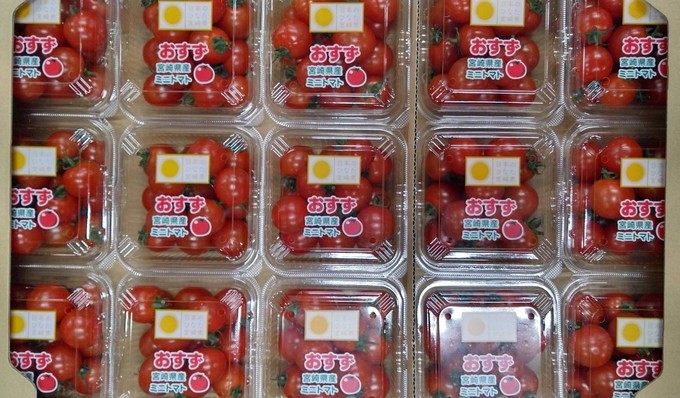
The JA Osuzu Mini Tomato Subcommittee received the 34th Japan Agricultural Award in recognition of its creation of a production area through environmental recycling-oriented cultivation that unites the region. The Miyazaki Eco Cherry Tomatoes produced by this group boasts such a strong flavor and consistent quality that it is as if they were born from the tropical sun, and are so popular that they sometimes cannot be shipped in time. Practicing reduced pesticide cultivation that is significantly stricter than the prefectural standards. At that time, all 38 members of the department were farmers who were certified as eco-farmers. Good soil is essential for good agricultural products. In collaboration with the "Green Gaia Experimental Plant" constructed by Tsuno Town, Koyu District, etc., the fungal fertilizer made from household garbage produced here will enrich the soil in a way that makes it unrecognizable, and the local community will grow. Environmental recycling type cultivation that returns garbage to the soil is also realized. Green Gaia, which Tsuno Town has been experimenting with since 2000, is a processing plant that utilizes fermented raw garbage to create soil. Approximately 400 kg of raw garbage per day, which is transported from specific businesses such as supermarkets, is fermented for half a day. It is used in two ways: applying it directly to farmland as a soil improver, and mixing it with livestock manure to make fully matured compost. When they return to the soil, the field is covered with pure white mycelium in about 6 days. It's called fermentation with the soil, and it seems that the use of pesticides and chemical fertilizers will inevitably decrease because the roots of the crops grow a lot. JA's tomatoes and cucumbers, as well as the grapes that make Tsuno wine, are also grown using this method. Good-tasting crops will become the town's brand, and combustible waste will be reduced. In the future, it is expected that awareness of resource recycling will increase, such as promoting the use of this technology by farmers.
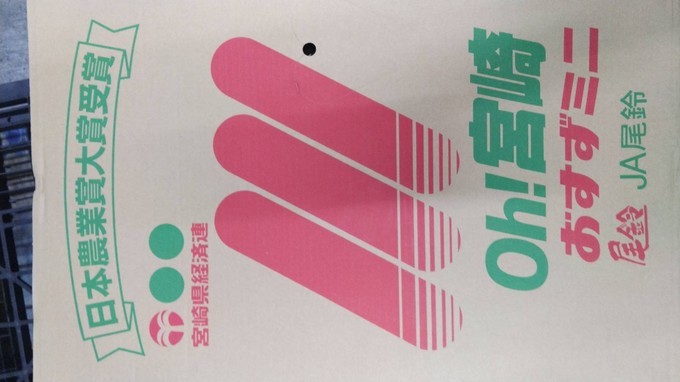
We strive to reduce pesticide use through thorough cultivation management, such as the use of insect nets, insect repellent sheets, and the use of natural pesticides. In addition, the food development laboratory of Keizairen conducts regular inspections of residual pesticides to check whether pest control is appropriate. Participate in the ODD movement (appropriate application of organic matter, deep cultivation, soil diagnosis). Do not apply excessive fertilizers, and apply appropriate fertilizers necessary for the growth and harvesting of crops.
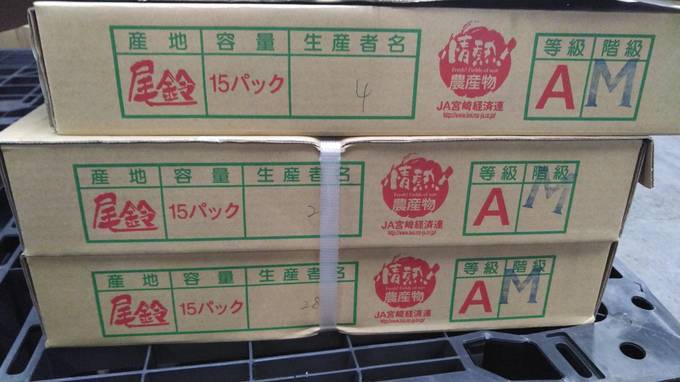
The terrain consists of mostly flat plains and mountainous areas facing Mt. Osuzu. In addition, the temperature is warm throughout the year with an average annual temperature of 17.8°C, and many agricultural products are produced in the jurisdiction due to the natural conditions suitable for agriculture.


コメント
コメントを投稿