It doesn't cost money to exchange cheerful and heartfelt greetings. We should exchange heartfelt greetings and words with each other and everyone we meet, and live our limited lives cheerfully and happily. What needs to be done now, what we can do now, should be done immediately. If we are a little late, it will be very difficult to catch up. As long as our parents and grandparents are healthy, we don't realize how grateful we are for them until we cry, thinking that they will stay healthy forever. In this respect, Yoshida Shoin, who sang the line, "No parent's love is greater than a parent's love," was a great man. Each person has abilities and talents that others cannot imitate. We must accept these and cooperate with each other to live our lives. Don't talk about people's bad habits, talk about people's bad habits. You should talk about people's bad habits, not about people's bad habits. Don't talk about people's bad points. A needle may be small, but it's not something you can swallow. Similarly, people may be small, but they have guts and often grow into great people. If you're hungry, everything tastes good. People who work hard, get hungry, and can eat anything without being picky are healthy in mind and body.
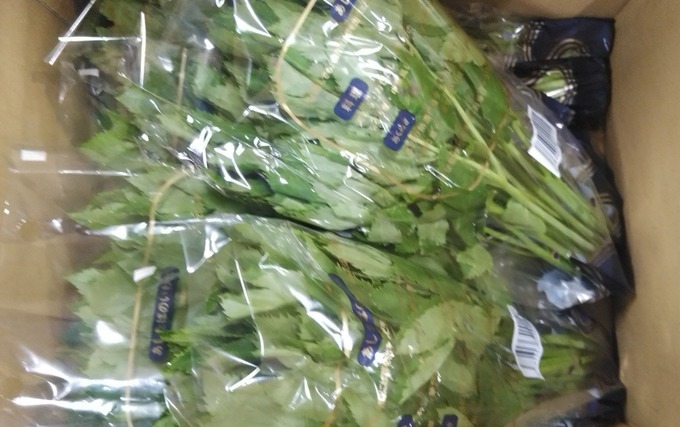
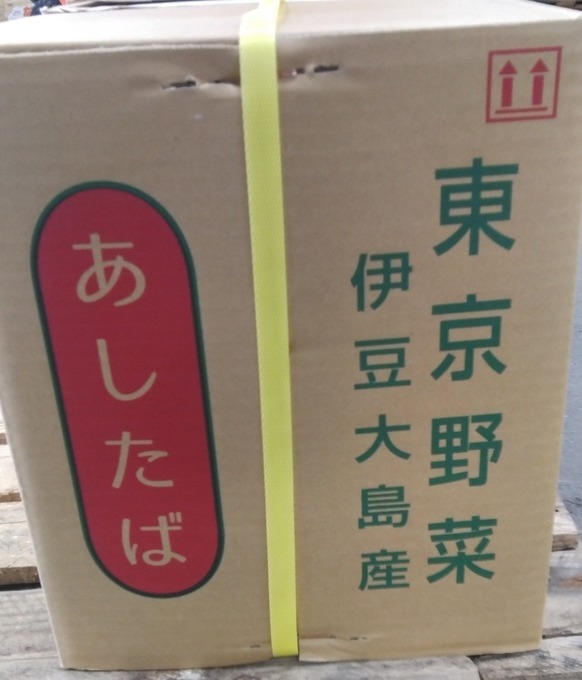
After the Meiji Restoration, the administration of the island passed through Nirayama, Ashigara and Shizuoka Prefectures, and in 1878 it was transferred to the jurisdiction of Tokyo Prefecture. After the war, in January 1946, Oshima was separated from the administration of the Japanese government and placed under the military administration of the Allied Forces in Japan, but returned in March of the same year. In 1955, six villages that had developed along the coastline merged to form Oshima Town. The natural landscape, which was incorporated into Fuji-Hakone-Izu National Park in 1964, has a warm climate and is popular as an island of healthy relaxation. It seems that it is also in the spotlight as an island of. I have heard that the project to support the nationwide expansion of new businesses that utilize regional power of small businesses is a project that aims to revitalize the region by working together with the chamber of commerce and industry while utilizing regional resources. Since 2006, about 1,400 projects have been adopted nationwide. We will develop regional products using local agricultural and fishery products, make regional "food" local gourmet, and inbound (in Japanese, "coming in from the outside") accompanying the increase in foreign tourists visiting Japan. In the travel industry, it is used to mean that foreigners come to Japan for sightseeing). I have heard that it is. Eruptions, typhoons, fires, earthquakes, etc. have been occurring since about 8,000 years ago when people began to live on Oshima. Life and environment have changed over the course of various histories, but the progress of transportation in particular has brought the mainland closer to the mainland by boat in 60 minutes. In addition, about 80 years after the first plane landed in the Mt. Mihara(It is a central crater hill that sits in the caldera on the mountaintop. It was born in the Anei eruption that started in 1777, and has a steep vertical crater with a diameter of 300 m and a depth of 200 m or more at the top. It is known for its active basaltic magma among the active volcanoes in Japan, and it erupted once within about 35 years and gradually changed its appearance. The pillars of fire and fireworks, including the small eruptions that occur during that time, have been praised as Goze; Gojin Fire since ancient times. It has been quiet since the 1986 eruption, and you can directly see the magnificent view around the crater. If you turn around, you can see the wonderful scenery of the four seasons inside and outside the caldera, and you can also see the islands of Izu, the Izu Peninsula, and Mt. Fujiyama beyond the ocean.)Desert, two flights a day took 30 minutes to reach Tokyo, and regular helicopter and small aircraft flights to each island of Izu were realized. After the Meiji Restoration, the island was ruled by Nirayama, Ashigara, and Shizuoka prefectures, and then moved to the jurisdiction of Tokyo prefecture in 1878. In January 1946, Oshima was separated from the administration of the Japanese government and placed under the military administration of the Allied Forces in Japan, but returned in March of the same year. In 1955, six villages that had developed along the coastline merged to form Oshima Town. The natural landscape, which was incorporated into Fuji Hakone Izu National Park in 1964, is popular as a healthy resting island with a warm climate. It is also in the limelight as an “Island”. In addition to Mt. Mihara, Tsubaki, and Anko (originally a title for superior women), Izu Oshima, which is now the closest resort island to the Tokyo metropolitan area and is known for the evacuation of all islanders due to the 1986 evacuation, is 120 km from Tokyo. It is the largest of the Izu Islands in the Pacific Ocean. As for the terrain, 70% of the total island area is forest wilderness, but the flat land ratio in the Izu Islands is high and development is progressing, but 97% of the island is regulated by the Natural Parks Act, so the natural landscape and ecosystem are sufficient. Protected by. One of the historical materials to know about Izu Oshima is “Izu no Kuni Oshima“ submitted to Egawa Tarozaemon (then Edo-period prefectural governor (magistrate, bailiff) of Izu Nirayama) who was in charge of controlling it from Izu Oshima in 1789. ”Send book“ comes to my mind. The “Izu no Kuni Oshima Sending Book" and “Oshima Town History” provide an overview of Izu Oshima from the perspective of domination in the middle of the Edo period. From there, we can see what kind of environment Izu Oshima is in, what was harvested and exploited, and how the residents of Izu Oshima responded to it. Initially, it was said that both the salt annual tribute and the Miguchi; 口添 salt annual tribute (added to the annual tribute) were made into grilled salt. And instead, rice was put down (given) as a holding rice. However, the annual tribute became a gold tribute from 1690 because the salt slab was damaged and its production became impossible. In addition, in 1723, stipend in rice was also suspended. As a result, the annual tribute delivered from Izu Oshima seems to have been changed to a form in which 10% of the selling price of special products sold outside Izu Oshima in Edo is paid as a transportation fee. Another historical source for learning about the Edo period is the “past book.” “History of Oshima Town” introduces this historical material mainly to the drifters, but I would like to talk about the shipwreck. First, looking at the “past book” left at Kaichu Temple, on the 25th day of the new year of 1867, the end of the Edo period, a ship owned by a fisherman in Mera Village, Chiba Prefecture (currently Tateyama City, Chiba Prefecture) was found at Namiuki Port. There was an incident in which four of the six mariner, “Mr. Denpachi, Mr. Tadajiro, Mr. Kurakichi, and Mr. Otokichi,” were drowned when they were overthrown. Only one corpse was landed, but all four were buried, and each of them used “Great blue sea; ocean”, which means the sea or the ocean. It seems that the name “溟観信士 / 溟現信士 / 溟退信士 / 溟瞬信士” was given. Considering that it is a Chinese character that is not found in the dharma names given to people on the island, it can be said that the dharma names are associated with visitors and drowned people from outside the island. In the “Past Book” of Chonenji, a ship owned by a person living in Ishinomaki, Sendai, Oshu broke down in Senzu Village on September 5, 1897, and the final four were “Mr. Tadayoshi, Mr. Heikichi, Mr. Kinpachi, and Mr. Bungoro.” It is written that he died in. These people were also given a Dharma name and were buried in an unrelated Buddha on the island. From the example of Kaichu Temple, it seems that there was a glimpse of how to name the dharma name, and from the example of Chonenji Temple, there was a burial system, and a system to mourn those who had been wrecked from other places was in place throughout the Edo period. It can be said that such a wreck was likely to occur because Izu Oshima was an island surrounded by the sea and because it was an island close to the mainland from the traffic route of ships. Izu Geopark is a place where you can get acquainted with the origins and characteristics of the land in which you live, and learn about the scenery, flora and fauna, and people's lives (history, traditional culture, customs, festivals, local industries, local products, etc.) that were nurtured in that area. It refers to an area that is being protected as an important treasure of ourselves and is being effectively utilized in initiatives such as education, disaster prevention, and industrial promotion. Izu Oshima was certified as a Japanese Geopark in 2010. Izu Oshima, a volcanic island where eruptions create an island. The island here is full of black lava flows, large craters, black deserts with lava, and other views of living volcanoes. The creatures living on the island have lived in a harsh environment by changing their physical structures and lifestyles. And it seems that the lives of the inhabitants have also been carried out in connection with the volcano. Special products of Oshima Town: Luffa cylindrica(L.)Roem. products, Luffa deep water, camellia oil, camellia flowers, salt, dyeing, Kusaya, tomorrow's leaves, local dishes: Bekko sushi, Namero sushi, Aokara misomaki B-1 Grand Prix exhibition dishes, Local gourmet: Lava rice ball, Sightseeing spots: Mt. Mihara, Fudeshima, Namiuki Port, Oshima Park, Event: Tsubaki Festival (late January), Izu Oshima Summer Festival Fireworks Festival (mid August), Izu Oshima Autumn Fair, Night Festival Marathon tournament held in Oshima Town Izu Oshima Marathon Oshima Town's hot spring area Kuroshio Onsen Benitsubaki no Yu, Oshima Onsen, etc. Izu Oshima, a volcanic island, is warm and rainy all year round, so the land can get a lot of water, which is the best environment for Ashitaba. Another thing to remember is the existence of a reassuring partner, Alnus firma (commonly known as alder). Deciduous trees that grow from hills to mountainous wetlands and rivers. In the summer, the shade of the leafy Alnus firma protects the leaves from the strong sunlight tomorrow, and from autumn to winter, the fallen leaves of the Alnus firma serve as fertilizer for the leaves tomorrow. A large amount of rhizobia coexist in the roots, and these rhizobia dissolve in the soil to create a fertile land. Protected by the earth and Alnus firma, Ashitaba is growing every day. The alder tree is a deciduous tree that is the raw material for firewood, and if you compare the ones cultivated under it with the ones that are not, the tomorrow's leaves around the alder tree are by far superior. This is because a large amount of rhizobia is attached to the roots of the tree, and the rhizobia constantly melt into the soil and store abundant nutrients. An element that absorbs this nutrient sufficiently and grows excellent tomorrow's leaves. The deciduous alder tree grows its leaves in the summer to protect tomorrow's leaves from the direct sunlight, and falls from autumn to winter, using this as fertilizer and allowing the leaves to shine enough sunlight tomorrow. There is a cycle called. There are two types, Izu Oshima and Hachijojima, and it is said that the shape of each island is slightly different even in the Izu Islands. The color of the stem is generally called “Red stem” from Izu Oshima and “Green stem” from Hachijojima. In addition, the stems of Mikurajima are thicker than those of other islands, and the leaves and stems are edible. Nowadays, agricultural water is connected by pipeline, and it has become much easier to secure water, but the cohesion of producers is strong probably because they have overcome the hardships together. After the agricultural cooperative withdrew, the direct sales facility “Buratto House(It is named after the image of “a place where you can easily drop in”, and the photo of the member farmer's face is posted in the store, and the farmer's name is written on the product, so you can rest assured that you can enjoy freshly picked vegetables. You can buy it.)” was built under the initiative of the producer. It is said that tomorrow's leaves are the only plants on the ground that contain “Hematopoietic Vitamins” and vitamin B12. When the leaves and stems are broken, a unique sticky yellow juice oozes. People on the island have used this juice as an anti-suppuration agent since ancient times, and this is bioflaponoid (rutin, isoquerciton). It has a strong antibacterial effect and is a rare ingredient. It contains 3 times more celery, 2 times more spinach, and 1.6 times more green beans and garland chrysanthemum, which improves metabolism and improves communication. It is also expected to be effective against obesity caused by constipation. In addition, it is a well-known fact that it contains more than 20 kinds of vitamins and minerals such as vitamin C, vitamin E, carotene, calcium and iron, including vitamin B2, which has a strong effect on anemia and is called “Hematopoietic Vitamin”. I hear that the yellow juice that comes out when cutting leaves and stems contains many components with strong antioxidant activity, such as the polyphenol chalcone; C15H12O(One of the organic compounds belonging to aromatic ketones. In a narrow sense, it is called benzalacetophenone, which does not exist in nature and is synthesized from benzaldehyde; C7H6O and acetone; C3H6O.)and coumarin; C9H6O2. In particular, chalcone is a component peculiar to Angelica keiskei, and is attracting attention from the medical society and food nutrition as it is effective in preventing blood clots, arteriosclerosis, and cancer.


コメント
コメントを投稿