Takinogawa Group: Divided into two groups: those that use leaves and stems, and thick types. Burdock dislikes acidic soil and is tolerant to heat and cold, but has poor moisture tolerance. Also, it suffers from repeated cropping problems, so if grown in the same field, It is desirable to leave a cultivation interval of 4 to 5 years. From now, from 2300 to 13000 years ago, during the Jomon period, the Torihama ruins in Wakasa Town, Seeds have been excavated from the Sannai Maruyama ruins in Aomori City and the Oshirodoba ruins in Otaru City. Agriculture, forestry and fisheries, which govern the backbone of Japan, are the key industries of Aomori Prefecture. Rice is created with the aim of creating a shocking flavor that will surprise everyone.
Japanese nationalism includes the ideology advocated by Katsunan KUGA during the Meiji period and the principle of "popular sovereignty" in the Japanese Constitution. Born in Hirosaki, he is involved in unequal treaties, the Ashio Mine Poisoning Incident, and an unequal society. He published the newspaper "Nippon'' for the happiness of the neglected people and for Japan's true independence. He is a man who fought through those difficult times with just a brush.
Even after realizing his death, Shiki Masaoka tearfully spoke of him as "THE benefactor of my life.''
He expressed that there is no one more virtuous.
【Product name】
Burdock from Aomori Prefecture
【Type】
Arctium lappa L.
【Production area】
Aomori Prefecture (JA Zennoh Aomori, Southern 4JA Council)
【Origin of name】
It is said to be derived from the Chinese word "burdock", which has been introduced from China as a medicinal herb since ancient times. From ancient times, "牛" has been used for grasses that resemble "蒡" burdock from large plants.
【Main features】
Burdock is well known as a vegetable peculiar to Japanese food that is not customary to eat in foreign countries, but at the same time, it is also well known as a vegetable with a large amount of imports. The direct reason for the sharp increase in imports from 1998 was that domestic yields decreased by nearly 20% year-on-year due to low temperatures and long rains in the summer of the same year and typhoons in September and October, and prices doubled or tripled. Although it has soared above, it seems that this is not the only reason for the increase in imports. It seems that a major reason was that Japanese import trading companies and seedling companies had been focusing on burdock production in China for several years already in order to make China an export base for burdock. It seems that the reason for focusing on burdock production in China was that the production capacity of burdock began to decline visibly from around 1990 due to the aging of producers in Japan. Even if the domestic production capacity of burdock has declined, it does not seem that the production of burdock has decreased in all regions of Japan. According to the alic survey, when comparing 1990 and 2005, the productivity is certainly declining in most of the major production areas, but it seems that only Aomori Prefecture showed a remarkable increase. There are several reasons why Aomori Prefecture grew while imports increased. For example, in the summer, cold wind descending from the mountains (in the Tohoku region in summer) a cold Pacific wind blows from the Pacific Ocean, so rice cultivation is often hit by cold damage and is affected by the weather. The cultivation of difficult root vegetables is flourishing, the soil of kuroboku, which is rich in loam volcanic ash and rich in rot, is suitable for burdock production, or with a cycle of 3 to 4 years, such as yam, carrots, and garlic. It seems that crop rotation is possible. However, the biggest reason is that JA in the prefecture supported the production of burdock and also focused on its sales. Among them, JA Oirase seems to have actively worked on production support and sales. As a result, the JA jurisdiction (Misawa City, Rokunohe Town, Kamikita District) seems to have become the largest burdock producing area not only in the prefecture but also in the whole country. Going back about 15 years, the quantity and amount accounted for almost a quarter of the total burdock shipment volume and amount in Aomori Prefecture, and more than half of the total burdock sales volume and amount of all JAs in the prefecture. Most of these shipments are currently in wholesale markets such as the central wholesale market. In the Kanto region, we ship to central wholesale markets other than Tokyo and some local wholesale markets, centering on the central wholesale markets of Tokyo such as the Daejeon market and Toshima market, and in other regions, mainly the central wholesale markets. It seems that they are shipping in the form of sending the cargo to the local wholesale market. In particular, looking at the sales aspect of JA Oirase, it seems that the sales destination area of burdock extends from Tohoku to Kyushu and all over the country except Hokkaido. The center is Kanto, with 35% of total shipments directed to the region, followed by 30% to Kyushu and 25% to Tokai. The total amount of destinations to the remaining Tohoku and Kansai areas is 10%. Of course, it is not just shipping over a wide area, but from the perspective of promoting advantageous sales, it seems that we are always trying to ship according to the difference in demand in each region. For example, relatively thick burdock is mainly shipped to Kanto, and thin burdock is shipped to Tokai and Kansai. Most of the shipments are shipped to the wholesale market, although mutual trust has been established for a long time, but it seems that it is not the only one. In the case of the wholesale market, it always sells the entire daily shipment on the same day, accepts shipments of all standards, and the price in the wholesale market seems to be the basis of transactions outside the wholesale market. When it comes to direct transactions with mass retailers, I heard that the standard products required by the other party are limited to the quantity required by the other party, and in many cases, the price will be the same as the wholesale price in the wholesale market. There is. However, although it is not limited to JA, it seems that not all burdock sales were left to the wholesale market. He also actively cultivated sales channels other than the wholesale market. It seems that the aim was to stabilize the management of farmers in the jurisdiction and further strengthen burdock production by increasing stable transactions over a long period of time, that is, contract transactions as much as possible. On July 17, 2013, 4JA (Towada Oirase, Yuuki Aomori, Oirase, Hachinohe) in the south district of Aomori participated and launched the "Prefectural South District 4JA Council". Chinese yam, garlic, burdock, etc. are common. The aim is to increase the income of farmers by strengthening sales of core products, improving cultivation techniques, and jointly purchasing materials. About 30 people including the 4JA union leader and full-time director attended the establishment general meeting held in Towada City on the 17th. At the time of its inauguration, JA Hachinohe's union leader Sasaki was appointed as the chairman, and Yuuki Aomori's Ozeki union leader and Towada Oirase's Takegahara union leader were appointed. Okayama has a history of competing between production areas, but if he participates in Trans-Pacific Partnership Agreement, it will be a competition with overseas. There is a history of showing motivation to cooperate as a production area with a sense of crisis. JA Zen-noh Aomori was held on October 7, 2021 by the Kamitosan Wide Area Agricultural Promotion Association (Towada City, Misawa City, Yokohama Town, Noheji Town, Tohoku Town, Shichinohe Town, Oirase Town, Rokkasho Town, Rokkasho). Held a sales measures meeting in Towada, attended by JA staff and market participants. Reported that the planned shipment quantity for 2021 was set to 10200 tons. The growth of the 21st year production is set in consideration of the accumulated quantity from JA, considering that the roots tend to be short roots mainly in the M / 2M class from the result of the crop survey. Compared to the previous year's production, which had a smaller shipment volume than in normal years, the volume increased by 17%, and we decided to work on planned stable shipments to priority markets and implementation of distribution adjustments in consideration of regional / market characteristics and inventory quantity. It seems. In addition, it has been decided to expand the sales floor by conducting a promotion event by remote control at the store and a PR plan through TV programs, etc. toward the peak demand period. It seems that it was expected that the shipment volume of this prefecture's product would exceed the previous year's production as the stock of Kanto product was low. The Kamitosan Wide Area Agricultural Promotion Association was established in 1972 as the Kamikita Wide Area Vegetable Production and Shipping Promotion Association, and seems to have become the current organizational structure in 2018. The members seem to be 13 members of 9 municipalities, 3 agricultural cooperatives (Towada Oirase Agricultural Cooperative, Yuuki Aomori Agricultural Cooperative, Oirase Agricultural Cooperative), and Zen-noh Aomori Prefecture Headquarters. The Yasai Package Center, which is managed by JA Zen-Noh Aomori Prefecture Headquarters, seems to be expanding its yam, garlic and burdock cutting and packaging businesses by utilizing the stable supply from Japan's largest and most influential production areas. In particular, regarding yam, it seems that it has realized the securing of sales channels in urban areas by smoothly responding to the needs of actual consumers by increasing the number of items. It seems that the accumulation of responses to the needs of actual consumers has led to the expansion of the handling volume to a certain scale of 10% of the current system shipment volume. In addition to securing sales channels, these efforts seem to play an important role in understanding consumption patterns in urban areas. It is an easy package center that is expanding the handling volume, but it seems that there are still issues left. As for items other than yam, the handling volume is limited, so it seems that the response to the increase in demand of actual consumers is limited. It goes without saying that Aomori Prefecture is the production center of burdock, which boasts the largest shipment volume in Japan. Even in the prefecture, the Pacific side is the main production area, but there seems to be a reason why burdock cultivation is popular in this area. Normally, the climate is disadvantageous for the production of agricultural products, but it seems that it was perfect for burdock who prefers a cool climate. It is a gift of the wisdom of our predecessors. Burdock in this region is white and beautiful in color, has a strong scent, and is proud of being tight enough that the fiber does not get in the way. In addition, because it is grown in a cool climate, it requires less pest control and is very popular in the market. I would like to see an example of JA Oirase. For early spring sowing (sown from mid-April to early May), Tsuneyutaka burdock (Yanagawa Seeding Study Group Co., Ltd. (Omitama City, Ibaraki Prefecture): Gamma line to Riso yanagawa burdock at the Radiation Breeding Farm of the Agricultural Technology Research Institute in 1969. It is a fixed variety that has been cultivated through repeated selections at Ibaraki and Morioka farms. Riso yanagawa burdock (Yanagawa Study Group Co., Ltd .: Fruits and vegetables) is used for spring sowing (sown from early May to mid-June) after confirming that varieties that can be shipped early have characteristics that meet the breeding target in 1984. In 1948, Nagano, Chiba, Tokyo, Saitama, Aichi, etc. Obtain seeds from the prefecture and start a comparative study of quality. Among them, select one line obtained from Saitama and pay attention to the following points. Mainly cultivated). It seems that the harvest time is from the end of August to the middle of November when the long harvest begins, and the harvest is stored in the refrigerator and planned to be shipped until the middle of February. It is mainly sold to the market, but it seems that about 30 hectares of special cultivation of reduced pesticides and reduced chemical fertilizers are contract cultivation. It seems that they are shipped in two types: 10 kg cardboard and 4 kg plastic bags. Since the selection criteria are mainly for selling one or two bottles in retail, it seems that they are divided by the weight of one bottle and the number of bottles. In addition, since burdock has different tastes in each region, we ship burdock of the standard that the region prefers, mainly for small items with a thickness of M or more in the Kanto region and 2M or less in the west of the Chukyo region. Since the summer is cool in the Oirase area, there is little spraying of pesticides, and it seems that a system is in place to keep consumers relieved by keeping control records for all items. Among them, burdock has been certified by the "All-Agricultural Safety System" since 2004, and has undergone rigorous inspection by a third-party organization to meet consumer’s demands for safety and security, and is a production area where the whole picture of efforts can be glimpsed. It is also popular as a calorie and healthy food. Among them, it is widely known that it contains a large amount of dietary fiber. Dietary fiber has the effect of adsorbing carcinogens in the bowel, so it is expected to reduce the concentration of carcinogens and reduce the incidence of colorectal cancer. It seems to shorten the stagnation time of carcinogens. In addition, it has been clarified from the results of research that lignin in dietary fiber has an antibacterial effect and an effect of suppressing the development of cancer cells. In addition, it also excretes cholesterol, etc., so it seems to be effective in preventing arteriosclerosis. Furthermore, it is expected to be effective in cancer, constipation, stomach cramps, mouth ulcer, skin troubles, and recovery from fatigue.
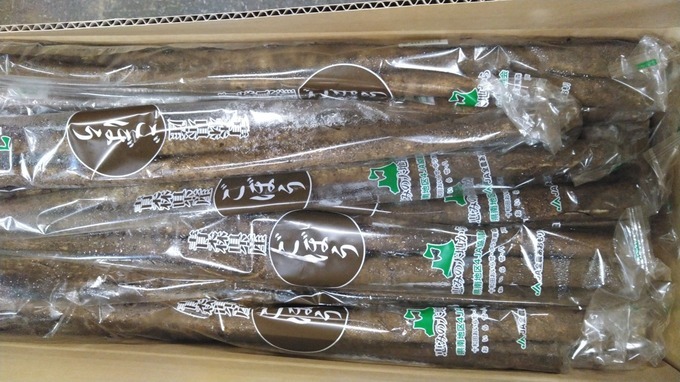
Burdock produced in Aomori Prefecture has a good aroma and flavor, and is characterized by a crispy texture that is firm enough that the fiber does not get in the way. In addition, because of its high quality, it is highly evaluated by the market. The production volume is the highest in Japan, and the main production areas seem to be concentrated on the Pacific side such as Misawa City, Towada City, Oirase Town, and Rokunohe Town. The Pacific side has a cool summer climate with cold wind descending from the mountains in the summer, the number of pest control is small, and the heightened health boom in recent years has made it the most highly regarded and expanding production.
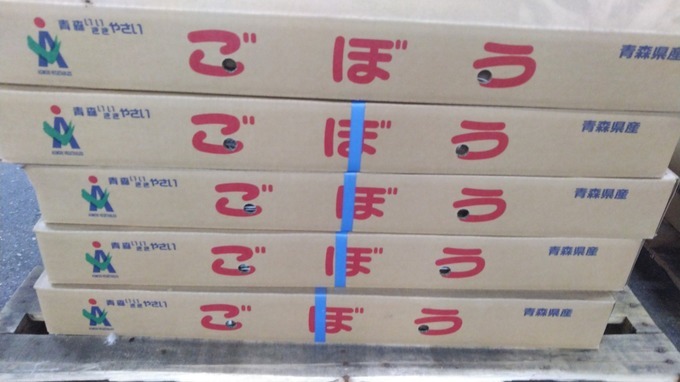
The season for burdock from Aomori prefecture is from September to November. Burdock seeds are sown from April to June and grown in the soil for an average of 130 to 150 days. After being harvested in early autumn, they are stored in the refrigerator and can be shipped almost all year round. In addition, burdock, which is a root vegetable, is a crop when "making soil" greatly affects the quality. In Aomori Prefecture, from fiscal 2007, "the healthiest soil preparation campaign in Japan (in Aomori Prefecture, in promoting the" aggressive agriculture, forestry and fisheries industry "that emphasizes sales from the consumer's point of view, the safety, security and quality that consumers demand. In order to strengthen the production area system that can stably produce and supply various agricultural products, all farmers in the prefecture will work on "healthy soil preparation" which is the basis of agricultural production in close cooperation with municipalities and related organizations. We are developing the "Japan's Healthyst Soil Making Campaign" aiming for this. From 2022, we will carry out the campaign based on the 3rd term "Japan's Healthyest Soil Making" promotion plan formulated in March 2022. Implementation. In order to prepare the soil environment where crops grow well, based on the soil diagnosis, organic materials such as compost and soil improvement materials are properly applied to the agricultural land, and appropriate soil management that combines deep cultivation and rotation is carried out. It seems that soil will be created with a good balance of physical, chemical and biological properties. In recent years, there are concerns that farmers' motivation for soil preparation will decline due to the aging of farmers and labor shortages. While the prices of fertilizers, fuels, agricultural materials, etc. are on the rise, the utilization of organic materials such as proper fertilization and compost based on soil diagnosis will lead to the practice of stable agricultural management. Soil) , and while conducting soil diagnosis and effectively utilizing organic resources such as rice straw and compost, it seems that they are working to create well-balanced and healthy soil according to the characteristics of crops and the condition of the field. This healthy soil allows the crops to grow robustly, producing good quality, delicious burdock by skilled farmers.
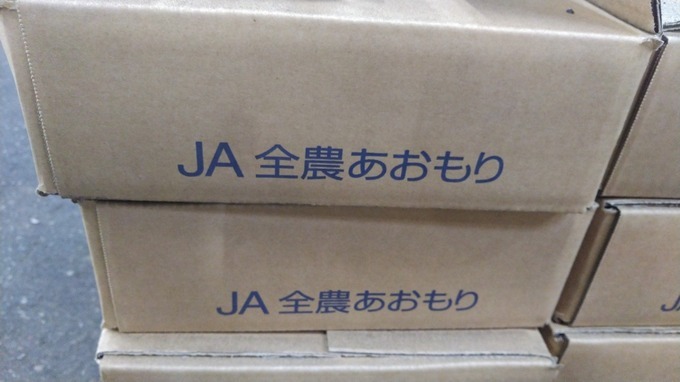
In Aomori prefecture, the cultivation of vegetables using the wide and abundant cultivated land and the cool summer climate has been a problem. The produced vegetables are shipped fresh to consumption areas such as Kanto and Kansai using pre-cooled storage facilities and highways. It responds to consumer preferences and needs because it produces less pests and does not use much pesticides. It seems that mainly root vegetables such as excellent japanese yam, garlic, and burdock, as well as vegetables such as green onions, tomatoes, cucumbers, and cabbage that were suitable for the summer. In addition, the production value of vegetables is the highest in the Tohoku region, and the shipment volume of garlic and burdock is the highest in Japan.


コメント
コメントを投稿