Translate

2025年2月28日金曜日

3450番歌, 乎久佐壮子をと乎具佐つけ壮士をと潮舟の並べて見れば乎具佐かりめり; If you compare a man who lives in Okusa with a man who wears grass on his waist like a boat going along the sea route along the shore, the man who wears grass to dispel evil is advantageous - 雷神社(千潟四十六郷 海上郡十三郷 鎮守)日本書紀; 天穂日命 五男神中一神 出雲国造: 朝影尓 吾身者成 辛衣 襴之不相而 久成者 - 律書曰 辛(新)者言萬物之新生 故曰辛 - 万葉集, 第14巻, 3386番歌: 尓保杼里能 可豆思加和世乎 尓倍須登毛 曽能可奈之伎乎 刀尓多弖米也母; かいつぶり(鸊鷉)がいるという葛飾の早稲を神に捧げる今日は新嘗祭. けれども愛しいあの人を外に立たせておけるだろうか


They share a lot of vegetables with us! The warm and generous people are charming. Compared to Tokyo, the summers are not too hot and the winters are not too cold, so the climate is warm and easy to live in. In terms of raising children, it is a blessed environment with many events that children can participate in for free, such as treasure hunts on the beach and musicals at the community center.


【Product name】

Ao-ton

【Type】
Capsicum annuum var. grossum
【Wholesale area】
Shinmachi, Asahi City, Chiba Prefecture (Chiba Prefecture Yamaki Shippers Association)
【Origin of name】
It is called Shishito mustard because it has a tip that resembles the head of a king of beasts. The flesh is thicker and softer than ordinary SHISHITO green pepper, and it has a flavor peculiar to chili peppers. Also known as “Wrinkled Old Man”.
【Main features】
As of 2022, the local Chiba Prefectural Meat Corporation and Asahi City Tourism and Products Association are paying attention to the raw leather produced annually in the process of meat processing. In collaboration with Tanning companies and local sewing manufacturers that handle leather products, we have developed "Kujukuri Leather(About 440,000 pigs are shipped annually from the city for meat. The prefectural meat public corporation in the city processes carcasses, and 90% of the surplus skin is exported overseas. The remaining 10% is processed into tanning leather by a trader in Tokyo. Only tanning leather from Asahi City is procured from a vendor in Tokyo, and K.K. Takano Sewing, K.K. Sewing Asahi, and Nakanishi Auto Repair K.K. in the city process the products into bags. In addition, it seems that there are more than 20 kinds of brand pigs in the city.)", a leather that utilizes locally produced pig raw leather. In Asahi City, Chiba Prefecture, which boasts one of the largest pig production in Japan, local meat traders, tourist product associations, and sewing makers have teamed up to take on the challenge of branding leather products using the by-product raw leather. Processed into bags and accessories as "Kujukuri leather". The whole meat and skin will be used to appeal to the local industry. The city's pig production in 2020 is estimated to be about 19.5 billion yen, and it seems that it is the second largest production area in Japan by municipality. While there are more than 20 kinds of various pork brands, it is difficult to unify PR, and it seems that the problem is that it is not well known as a production area. With the spread of cheap artificial leather and the declining global demand for leather products due to the new coronavirus disease, the raw leather industry continues to be in a difficult situation, so we will work together as a breakthrough. Asahi Meat Cooperative: Many people may think of pork as Kyushu, but in fact Chiba prefecture is the third largest pig farming prefecture in Japan after Kagoshima and Miyazaki prefectures. Our main production areas are the Toso region, including Asahi City, where the Asahi Meat Cooperative is located. The piglets seem to grow up quickly in a warm and blessed environment surrounded by Kujukuri Beach and the Tone River. 288 houses of pig farms raise 614,400 pigs throughout the prefecture, shipping about 870,000 pigs annually, and the amount of pigs produced is said to be 54.6 billion yen. Chiba Prefecture is famous for agricultural products such as peanuts, pears and rice, and marlin products such as marlin, marlin and sardines, and although it seems to be hidden behind the scenes, its history dates back to Edo. According to the record that "there are people who can raise pigs in Kamimusada, Yamabe District, Kazusa, Shimomusada, and Hosei's three villages during the Tenpo era (1830s)", the pig farming in Chiba Prefecture was later in Yamabe District, now Togane City. It seems that the beginning is around. It seems that there were already 20 soy sauce brewers in Choshi during the Bunsei era (1818-1830) before the 1930s when pig farming began. This is good because you can get good quality soybeans, wheat, and salt by using the water transportation of the Edo River and Tone River, and you can transport the products you made to the whole city of Edo. It was because the conditions were met. The Edo Shogunate at that time focused on fostering industries around Edo in order to escape from the dependence of daily necessities on the Kansai region. It seems that Choshi in Chiba Prefecture developed as a soy sauce producing area. Speaking of pig farming at that time, the mainstream was "garden pig farming" in which each farmer raised several pigs in the garden. Pig farming is a very small scale, and it was convenient for a producer to have one pig to eat anything. At that time, sardines were so big that they could be used as fertilizer in the fields, and the pigs in the garden seemed to be able to eat nutritious fish. As for the food, as the name "Sweet Potato Pork" suggests, it seems that they have been eating a lot of sweet potatoes since this time. Chiba Prefecture is also the second largest producer of sweet potatoes in Japan (2020). It began in the Edo period (Genbun year) when sweet potatoes were cultivated on a trial basis in Makuhari, Chiba City, at the behest of 8th Shogun Yoshimune to save famine. Thanks to the research of Konyo AOKI, who was later called Dr. Kanyo, cultivation spread to Chiba and eastern Japan. And soy sauce cake from Choshi's soy sauce factory. It is rich in soybean-derived fat, vitamin E, vitamin K1 (C31H46O2), and Isoflavones, and seems to be perfect for food. These special products of Chiba prefecture seem to have been a major factor in making pig farming nationwide as it is today. It seems that it developed because the blessed environment is complete, the production areas of soy sauce, agricultural products and marine products overlap with the breeding areas of pigs, and the large consumption area Edo is near. In the Meiji era, pig farming began to be established as an industry. In the middle of the Meiji era, the ancestors of the director of the association seemed to go to buy pigs by boat using the water transport of the Tonegawa River. Go up the Tone River to Ryugasaki and Narita in Ibaraki Prefecture, buy live pigs, put them in a bamboo basket, first ship to Choshi, put the unpaved road in a rear car, and then put it on the SL running on the Sobu Main Line. It seems that it was shipped to Tokyo. In the Taisho era, Hisaya Iwasaki (Mitsubishi zaibatsu) opened a Suehiro farm in Nanae, Tomisato Village, Imba District (currently Tomisato City), and has 200 breeding pigs on hand, up to 1,000 breeding, hams, sausages, bacon, etc. It seems that the processed products of were also produced. Together with the Livestock Experiment Station of the Ministry of Agriculture and Forestry and the Prefectural Sakura Breeding Farm, which were established after that, it seems that the foundation of pig farming in Chiba Prefecture was laid as a supply center for excellent breeding pigs. “Asahi City, Chiba Prefecture”, Yoshimasa KISO(19th descendant of General Asahi Yoshinaka KISO), a Sengoku warrior who ruled the area after the fall of the Muromachi Shogunate. 開基 : 殿玉山 西徳院 東漸寺, 1593(Shingon style Chizan-ha). 懸仏: A three-dimensional statue of Buddha(旭市指定文化財), 木曽義昌公遺跡(旭市指定文化財). It is said that he had good politics and was loved by the lords. Takamasa Nonokuchi(Okuni)- Kyoto poet: Time has passed and he visited in 1852 and wrote a poem. “信濃よりいづる旭をしたひ来て東のくにに跡とどめけむ”, I remembered Yoshimasa. Full of vigor and vitality (like the rising sun) (vigour); It also comes from the desire to develop with momentum in the future. Located in the northeastern part of the prefecture. It is located within 50 km from Chiba City and 80 km from the city center. The southern part faces the beautiful bow-shaped Kujukuri beach. ‘干潟八万石(Approximately 5,100 hectares of farmland changed from sea due to reclamation in 1670: 辻内 刑部左衞門 - 井戸野と仁玉間の排水路工事; 新川が完成,椿海の排水開始.)’ , In the north(Boso Peninsula), a farm belt and a gentle hill zone, Hokso tableland, spread out. The surrounding area develops as an urban area. And the annual average temperature is 15 ℃, which is a warm climate.In industry: Institutional horticulture, livestock, rice farming, open-air vegetables, etc. Including active agriculture, fisheries, commerce, industry, etc., grow in a well-balanced manner. July 1, 2005: 旭市 / 海上町 / 飯岡町 / 干潟町(Area 130.45 km2), Born by merger. Expected to develop in the future as a nucleated city in the Toso region.旧石器時代: 約25,000年前-桜井遺跡, 縄文時代前期: 約6,000年前-九十九里海岸低地の形成, 縄文時代中期/後期: 約4,500年前-仲島遺跡, 坊之場遺跡, 古墳時代後期: 6-7世紀頃-東総地域最大の前方後円墳-御前鬼塚古墳, 鏑木古墳群等, 大化元645年: 房総-安房 / 上総 / 下総, 下総国-香取/海匝/海上, 鎌倉時代前期: 13世紀-東庄 / 三崎庄(千葉氏一族), 建長年間1250年頃: 然阿良忠(Ryochu Nena; 記主禅師)- 海匝 / 印旛地域(浄土宗)平安-鎌倉時代中期: 木造伝聖観音立像 / 木造阿弥陀如来(立像 / 絹本著色釈迦涅槃図)etc. 1826年: 宮負定雄 氏-平田篤胤 氏, “農業要集”, 1838年: 大原幽学-先祖株組合 ≒ “農業協同組合” - 長部村で結成, 1871年: 新治県, 1873年: 千葉県誕生, 1888年: 石橋太郎兵衛氏, 千本松喜助氏- 揚繰網開発, 1889年: パリの万国博覧会-濤川惣助(七宝家)氏-名誉大賞受賞, 1879年: 総武鉄道-成東銚子間開通, 1912年: 穴澤松五郎氏- “穴澤式改良甘藷苗床; 改良増収穴沢式甘藷栽培法: 西ケ原刊行会, 1935”, etc. 国指定 : 有形文化財(歴史資料), 大原幽学関係資料一括, 長部, 旭市, 平成3年6月21日, 国指定 : 記念物(史跡), 大原幽学遺跡旧宅墓および宅地耕地地割, 長部, 旭市, 昭和27年10月11日, 県指定 : 有形文化財(建造物), 玉崎神社本殿1棟, 飯岡, 玉崎神社, 昭和48年3月2日, 県指定 : 有形文化財(建造物), 旧林家住宅1棟, 長部, 旭市, 昭和54年3月2日, 県指定 : 有形文化財(建造物), 玉崎神社拝殿1棟, 飯岡, 玉崎神社, 平成17年3月29日, 県指定 : 有形文化財(絵画), 絹本著色釈迦涅槃図1幅, 琴田, 海宝寺, 平成11年3月30日, 県指定 : 有形文化財(彫刻), 木造伝聖観音立像1躯, 溝原, 東栄寺, 昭和41年5月20日, 県指定 : 有形文化財(彫刻), 木造阿弥陀如来立像1躯, 蛇園, 還来寺, 平成12年2月25日, 県指定 : 有形文化財(工芸品), 古瀬戸狛犬1対, 飯岡, 玉崎神社, 平成2年3月16日, 県指定 : 無形民俗文化財, 水神社永代大御神楽, 後草(水神社), 昭和29年3月31日, 県指定 : 無形民俗文化財, 鎌数の神楽, 鎌数(鎌数伊勢大神宮), 鎌数伊勢大神宮神楽保存会, 昭和40年4月27日, 県指定 : 無形民俗文化財, 倉橋の弥勒三番叟, 倉橋, 倉橋弥勒三番叟保存会, 昭和42年3月7日, 県指定 : 無形民俗文化財, 熊野神社の神楽, 清和乙(熊野神社), 鎌数伊勢大神宮神楽保存会, 昭和55年2月22日, 県指定 : 無形民俗文化財, 太田のエンヤーホー, ニ, 太田八坂神社氏子会, 平成20年3月18日, 県指定 : 記念物(史跡), 御前鬼塚古墳, 鏑木, 正賢寺(単立), 昭和50年3月28日, 県指定 : 記念物(天然記念物), 龍福寺の森, 岩井, 仙滝山 龍福寺(真言宗智山派)/ 旭市, 昭和54年3月2日.“Capsicum annuum”, Chili is native to Central and South America and is known as the fruit of the Solanaceae Capsicum genus. It is a highly adaptable plant and is cultivated and loved all over the world because it grows relatively easily in any soil. It is said that it became widespread worldwide when Christopher Columbus brought it back to Europe in the 15th century. In August 1492, the group departed from a Spanish port and sailed west to west in order to obtain Zipangu's golden country and Indian pepper. After a long voyage, I finally discovered the West Indies.They believed that this was India, called the natives Indians, and thought that the small red spicy fruits they saw there were peppers because of the way the natives used them, and brought them back to their country. Initially, the aroma was so poor that it was so spicy that the bright red fruits were merely cultivated for ornamental purposes. However, in Spain and Portugal, it was not possible to grow pepper with the flavor and spiciness that Europeans liked at the time, but it is said that spicy peppers could be easily cultivated. For that reason, it is said that it was gradually used as a spice. There are pungent and sweet varieties, and when it is called chili pepper, it usually refers to pungent varieties. 紅葉の山を思わせる多量の唐辛子; 浮世草子 / 世間胸算用, 1692; 大晦日は一日千金, I wrote Saikaku IHARA: In January, it was published by Osaka / Itamiya Taroemon, Kyoto / Uemura Heizaemon, and Edo / Manya Seibei as publishers, and consists of five volumes. “人間五十年の究まり それさへ我にはあまりたるにましてや 浮世の月見過しにけり末二年” - 西鶴置土産. “Green chili”, It is an immature chili pepper that turns red when it is fully ripened on the tree while it is still growing. Red pepper is a ripe green pepper. Well-known as a raw material for Yuzu Pepper, the skin and green pepper are made into a paste, and salt is added for aging. I hear that the peak season for green chili peppers is from July to September, and that the varieties are mainly “hot parasol” with high yields. When you think of it as a literally spicy umbrella, it's like a closed umbrella. It's a little spicy, but I can't stand the spicy spiciness that stimulates my appetite. It is said that a soil temperature of around 28 ° C is required for germination. The planting period for open-field cultivation is based on the time when there is no concern about late frost, and temporary attraction is performed after planting to prevent lodging due to the wind. Pruning removes all the axillary buds below from the first branch (where the first flower settles). Topdressing should be done when the fruits are the most enlarged to some extent. As the branches grow, they are attracted firmly to prevent lodging, and it is recommended to take early action against pests. It is colored and fully ripe in about 50 to 60 days after flowering, and the cropping table shows the harvest period of ripe fruits, which is about 30 days after flowering. The standard for harvesting fruits and vegetables is when the skin color becomes darker and the skin becomes glossy.
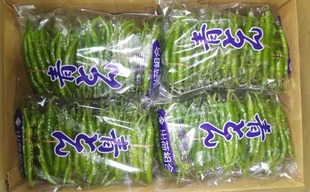


Photo_21-07-03-06-45-39.913~2.jpg

Chili peppers are said to be spicy as they mature. In other words, red pepper is more spicy than green chili. This is because capsaicin accumulates in the white cotton area around the seed, called the placenta. That's why it gets hotter as it matures. It is said that if you make red pepper and dry it, the spiciness will increase further. It is a plant of the genus Capsicum of the Solanaceae family, and I heard that the country of origin is Central and South America. It is said that it was transmitted from Central and South America to Europe, via India and China, and then to Japan in the 16th century. Thousands of varieties are cultivated all over the world, and it is indispensable for various dishes such as Korean food, Chinese food, ethnic food, and curry. In addition to common red peppers and green chili, there are also varieties such as yellow, orange, and purple. In addition, peppers and paprika are also plants of the genus Capsicum of the Solanaceae family, which is the same as chili peppers. Certainly, I feel that the shapes and textures are somewhat similar. In addition, it has a bactericidal and insect repellent effect, and if you put dried red pepper in a rice bowl, insects will not easily attach to the rice. It is said that pests can be prevented by soaking in shochu with garlic, diluting it and spraying it on plants.
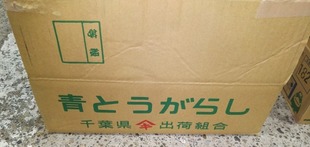

Photo_21-07-03-06-45-42.117~2.jpg

It seems that green chili has an appetite-promoting effect and can be expected to prevent it in the summer. The hot days continue this year, so why not give it a try? The recommended way to eat it is green chili miso. It can also be used for rice balls and various dishes, so please come with your children!

Photo_21-07-03-06-45-44.742-f80f7.jpg

As for the knowledge, chili peppers continue to spread throughout Japan from the Warring States period to the Azuchi-Momoyama period and the early Edo period. The use for food is rather modern, and it seems that when chili peppers first arrived in Japan, they were treated as poisons due to their spiciness, or they were put in japanese socks with split toe to prevent frost burning.

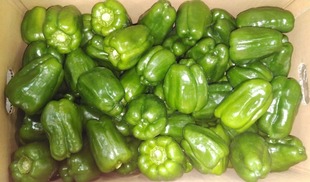
2025年2月7日金曜日

Japanese Lantern Festival in KOGA: Known as a strange festival in the Kanto region. Held on the 1 Saturday of December at the Festival Special Venue in front of the west exit of KOGA Station. A lantern is attached to the tip of a bamboo pole with About 20 young people from a length of 10 to 18 m. At this festival, the priest of Nogi Shrine, which was the territory of the KOGA feudal clan in the Edo period (currently Nogi Town, Shimotsuga District, Tochigi Prefecture), dedicated the Gods halberd. Riding a horse, visiting the subordinate shrine of Shichiga-mura, the shrine's territory, finishing the "Nanago Tour" and returning to the office at the end of December 3rd, the people who greeted with lanterns to survive the cold It started with rubbing the bodies together, and the name was said to be "homecoming."

【Product name】
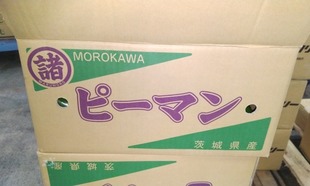
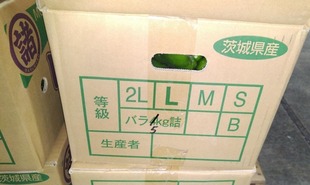
Morokawa green pepper

【Type】

Capsicum annuum L. ‘Grossum’ group

【wholesale area】
Morokawa, Koga City, Ibaraki Prefecture (Morokawa Blue Sales Association)
【Origin of name】
Originaire du mot «piment», il est transmis du Portugal pendant la période Edo. The flower language of POVIRON is “blessing of the sea, profit of the sea.”
【Main features】

Ibaraki Prefecture has the largest acreage and production volume in Japan. More than 90% is cultivated in the Rokko area, boasting the largest cultivation area and production volume in Japan. Recommended for barbecue in the coming season as oil improves the absorption of nutrients in peppers. Ibaraki Green peppers, which pursue “safety, security, and freshness” through a cultivation method that takes quality and the environment into consideration, are characterized by their deep color, gloss, soft meat, and less bitterness. Bell pepper is a plant of the Solanaceae family native to tropical America. The name comes from French (piment), and in English it is called bell pepper, and the green one is called green pepper. As the name suggests, peppers are a member of pepper, but they are not spicy because they contain almost no capsaicin, which is a spicy ingredient. In the past, it seemed that many people were not good at the unique green odor, but recently, breeding has progressed, and varieties with less loss are being born. “Koga City, Ibaraki Prefecture”, It is located in the center of the Kanto Plain, at the western end of the prefecture. Saitama on the west side, Tochigi on the north side, Yuki City on the east side, Yachiyo Town. The south side is in contact with Goka, Sakai, and Bando. The terrain is flat over almost the entire area, and the climate is generally warm. The climate is also generally warm: In natural conditions blessed as a place of living and production. Area 123.58 km2 : Geographical conditions-Also, the distance to Tokyo, Saitama City and Utsunomiya City is 50-60 km. Including JR Utsunomiya Line, the transportation network of Japan National Route 4 and New Japan National Route 4 etc. has been improved. In addition, exchanges with Saitama New Urban Center, Oyama, and Utsunomiya are active. In recent years, population, housing, and industrialization have been concentrated. “古河”は, 古く“許我"と表記. The scene of that time is described in the Manyoshu. It was already crowded as a ferry port for the Watarasegawa River from the Nara Period. ‘万葉集 / 巻十四, 東歌’ - 逢(あ)はずして 行かば惜しけむ 真久良我 (まくらが) の 許我 (こが) 漕ぐ船に 君も逢はぬかも; お会いしないままで 出かけてはとても残念だな. 真久良我の許我を漕ぐ舟の上の貴方にお会いできたらいいのにな.(3558), 真久良我の 許我の渡(わたり)の 韓楫; 可良加治 (舵; からかぢ) の 音高 (おとだか) しもな 寝(ね)なへ児ゆゑ(ヱ)に; 真久良我の 許我の渡しの韓楫(梶)の音が高いように 噂が高く立ったな. 未だ共寝をした娘ではないのにな(3555). Koga Village, Expression of one's feelings-It shows that it is a land of rich culture centered on the river. The army of calligraphers is a calligrapher-故, 大久保翠洞(Suido Okubo-Mainichi (literally, everyday), Founder of the “Engraving” department. 1906-1997). “Tone River monument” - まくらがの 許我の渡りのからかじの音高しもな寝なへ児ゆえに; まくらがの許我の渡し場に響く韓梶の音のように噂が高いね. 一緒に添寝もしない子なのに, 逢はずして行かば惜しけむまくらがの許我こぐ船に君も逢はぬかも; 逢わずに行くのは残念だよ. まくらがの許我を漕ぐ舟であなたにひょっこり逢えないものか. The other monument stands on the Watarase sword beside the Suzume(鎮め)Shrine(宮前町). The army of the book is a seal carving-故, 生井子華(Shika Ikui; 1904-89). Kawatodai Remains(牧野地): There was one of the largest steel making shops in eastern Japan from the beginning of the 9th century to the 10th century; 古河市教育委員会 2012 “川戸台遺跡" 古河市埋蔵文化財調査報告書10, まくらがの里遊歩道建設に伴う牧野地地区埋蔵文化財調査報告書, 種別; 製鉄, 縄文時代, 縄文土器, 土製品, 石器, A large amount of iron-related relics have been excavated. In particular, the amount of excavated mold is 565.981 kg. 獣脚付き鍋や, 把手付き片口鍋等を製作. In addition, letters are engraved on the mold, and when it is inverted, “弥勒”の「勒」, A board-shaped mold that can be read as is excavated. 種別; 製塩, 古墳地代, 竪穴2, 土師器, 円筒埴輪, 石器, 製鉄, 平安時代, 炉4, 工房1, 炭窯1, 粘土採掘坑2, 排滓場4, 柱穴1, 溝4, 路壁, 羽口, 小型専用坩堝, 鋳型, 鉄製品, 土師器, 須恵器, 灰釉陶器, 瓦, かわらけ(土師質土器), 内耳鍋, 製鉄, 中世(細分不明)時代, 溝4, 中世以降. Nagaoki Eguchi kiln remains: A semi-basement type flat kiln was also discovered in the latter half of the 9th century. 毛野考古学研究所他 2011 “江口長沖窯跡” 古河市埋蔵文化財調査報告書5 , 筑西幹線道路整備に伴う江口地区内埋蔵文化財調査報告書. It seems that it was also a production base for iron and ceramics. The home of Koga from the late Muromachi period to the Warring States period. 5th Kamakura kubo (Governor-general)-higeuji Ashikaga(Founder)has moved from Kamakura to Koga. Assassination of Kanto Kanrei, Noritada Uesugi, 享徳の乱; After that, it was handed over to Masauji, Takamoto, Haruuji, and Yoshiuji for about 130 years. Castle town of Koga Castle in the Edo period: Koga-inn(通町; 横町, 1,2丁目, 台町, 原町. 脇町 / 街道東側, 鍛冶町, 新町, 八幡町. 西側; 石町, 江戸町, 大工町. 川沿い; 悪戸新田, 船渡町. 枝町; 紺屋町, 天神町, 田町, 青物町, 七軒町, 肴町, 元肴町, 四谷 / 嵯峨. 屋敷町; 厩町, 白壁町, 仲之町, 鳥見町, 杉並町, 代官町, 三神町, 片町, 六軒町 / 四軒町.), a post town on the Nikko Kaido, flourished. The Koga domain spans Shimousa, Shimotsuke, and Musashi provinces. The city area was also incorporated into Ibaraki Prefecture via Shimousa and Chiba prefectures. Former Hitachi country, formed mainly by Mito Kaido(The roads which ran from Edo to Sendai along the Pacific coast were called “Rikuzenhama-kaido Road,” and among them the one which ran to Mito City, where one of three privileged branches of Tokugawa family was located, was occasionally called): Positioned as a sidestream in the history of Ibaraki Prefecture since modern times.“Nirei / Nire(仁礼; 仁連)” is a place name from the Warring States period. 第4代古河公方 / 足利晴氏 公安堵状写: 若林 / 仁礼両郷. During the Warring States period, it was a royal palace of Koga Kubo. Chigyo Enforcement Letter on September 20, 1590-From Hideyoshi to Harushige Yamakawa(Originally a retainer of the Yuki family-山川綾戸城; 現:結城市山川新宿): 幸島郷之内 二十五貫 仁連. Nirei Town, It was allowed as a post station on the Nikko Higashi Kaido (Nikko Sekiyado Takodo): 江戸時代; 1648年(慶安元年)11月6日-猿島郡郷土大観, 1927: 往昔領主堀江侯なるもの 若林に小城を設けて居住せし... By the way, Nirei also has the upper and lower towns that are often seen in post stations. Kami-cho is located on the north side and Shitamachi is located on the south side. In order from the south-Uemachi, Nakamachi (Nakamachi), Shitamachi in order. Why are Nirei and Morokawa in the opposite order? There's room for improvement. Forgive me because I still lack research. 鷹見泉石(古河藩家老)(公)関係資料(H16, 国指定文化財; 歴史博物館(中央町)) 文書 / 記録類686点, 絵図 / 地図類768点, 書籍類466点, 書状類912点, 絵画 / 器物類321. Morokawa inn is the 7th post station counting from Oiwake between Mito Kaido Kogane inn and Abiko inn , which was the starting point of Nikko Higashi Kaido in the Edo period. “Koryuji Temple (Jishū sect (of Buddhism)) Oan 4th Year Name Plate Monument (City Designated Cultural Property)” -諸川-Built in November 1371 during the Nanbokucho period, the Nijo line and border are clearly engraved, and the principal idols Amida Nyorai (Kiriku) and Rengeza, as well as a delicate canopy on the principal idol. A vase is vividly carved under the lotus position. Height 65.8 cm (on the table), width 25.7 cm, thickness 2.2 cm. “Sanwa Gion Bayashi”, Morokawa castle owner Kanro Shinanokami rebuilt Nagamiya Shrine, and Gion Bayashi appeared at the summer festival held there around 1438. Dedicated with a prayer for a good harvest, disaster control, and extinction of the plague. A long time ago, it was called “Kabasan Bayashi” until the Meiji era because it was also used for festivals at Kabasan Shrine. Hayashi, which has been handed down in this area, was handed down by a Kagura servant living in 東山田五味蔵 (Yonekura) in 1772-80, and is said to have reached the present day. It has been declining since before World War II, and was inherited as a comfort for the elderly until around 1960, but it was revived after the awakening of a young man. Currently, 7 branches (Morokawa, Komagome, 宿, Yonekura, Onna, Setoyashiki, Shimouchi) are active. The “Koga Peach Festival” will be held from late March to early April at the Furukawa Comprehensive Park, which has about 1,500 peaches of five types. The peach forest in the general park is considered to be the best peach forest in Japan. The first event was held in 1977, shortly after the opening of the general park. Peach is characterized by darker flowers than cherry blossoms. “Koga Castle” was located on the left bank of the Watarase River, and now most of the ruins have been lost due to river improvement, leaving only some of the earthworks and moats. It has a long history and was built at the end of the Heian period by the later Gokenin of the Kamakura Shogunate, Yukihira Shimokawabe. The castle at that time and until the time of Koga public affairs in the Muromachi Period is not known in detail, but it is said that it was a natural fortress on a long plateau between the Watarase River on the west side and a swamp on the east side. The castle area in the Edo Period, including the water moat, was approximately 500 m east-west and 2 km north-south, making it one of the largest in the Kanto region. The west side of the castle was the Watarase River, and the other three sides were water moats. In the structure, a plurality of curved rings surrounded by earthen walls were arranged in a straight line, and there were a main circle, a outer citadel, a Sannomaru, and the like. The castle tower was not built, but the tower on the 3rd and 4th floors, which was 22 m high and was built in the northwest corner of the main enclosure, was the actual castle tower. As the only remains of Furukawa Castle, the Inuimon remains as the gate of the Fukuhoji Temple (Otani sect of Shinshu) in Koga City. The Koga Castle Ochayaguchi Monument along the Old Nikko Kaido used Koga Castle as an inn when the third shogun, IEMITSU, visited Nikko. It is said that it is the site of a teahouse established by the castle owner Toshikatsu DOI to entertain it. Since then, it has been a customary place to greet the shogun and the prestigious daimyo, and the other party also comes to greet here(aesthetic sense in Japanese art centered on the acceptance of transience and imperfection; 侘び寂び ≒ WASABI). Since then, it has been a customary place to greet the shogun and the prestigious daimyo, and the other party also comes to greet here. It is said that the other daimyo were treated at the treats bansho in Sakana Town.


Photo_21-07-15-07-26-29.836~2.jpg

Koga City is located in the center of the Kanto region, at the westernmost tip of Ibaraki Prefecture, and is famous for its history and tradition, with nature rich in water and greenery facing the Tone and Watarase rivers. Even now, the city is dotted with many temples and shrines that retain the remnants of castle towns and post towns. In addition, it seems that historical and cultural facilities are concentrated at the west exit of Furukawa Station, such as the Furukawa Historical Museum and the Tenkoku Museum. Hanamomo no Sato, Furukawa Comprehensive Park (also known as Koga Park. Area of about 23ha (maintained). Opened in 1975. About 2000 peach trees are famous. The peach festival is held in spring. There are also Oga lotus (meaning the ancient lotus fruit found at the Kemigawa site in Hanamigawa-ku, Chiba city in 1951) and Ayameen, where you can enjoy seasonal flowers. Furukawa's peaches are in Edo. At the beginning of the era, Toshikatsu Doi, the feudal lord, had the children of Edo's vassals collect peach seeds and sent them to Furukawa in an attempt to enrich the lives of the people as much as possible. It grows in a few years and can be eaten. It is said that the trees can also be used as firewood. After that, around 1764-80, the peaches were replanted, and so It seems that it has become known as a famous place for peaches. It seems that the peaches that were planted at that time were edible varieties such as Hanbei Peach, Kintoki Peach, Tianjin Peach, and Suimitsu Peach. There was a special train from Ueno Station, and there was a dance of Geiko and a horse racing tournament at the venue. During the war, Momobayashi was changed to a field of wheat and land rice to increase food production. Since then, the momentum for revival has increased, and maintenance has started in 1973. In 2003, it was the first in Japan to receive the "3rd Melina Mercuri International Award for the Protection and Management of Cultural Landscapes" sponsored by UNESCO and Greece. This award was established in 1992 to honor outstanding activities aimed at preserving and managing the world's major cultural landscapes. Melina Mercuri (1923-94) is the Minister of Culture of Greece, working to harmonize landscape conservation and sustainable development. Originally active as an actress, she won the Cannes Film Festival Leading Actress Award for "Don't Sunday". The prestigious award was given as a general evaluation that "it was in the suburbs of Tokyo and withstood development pressure", "regeneration of nature and culture by restoration of the disappearing swamp (Gosho-numa)", and "various contacts between nature and humans". The three points of "a design that expresses the nature" and "the activities of the citizens who are familiar with the nature of the four seasons" were highly evaluated.) 1500 peach blossoms of five types are in full bloom, which is pleasing to the eyes of visitors.

Photo_21-07-15-07-26-34.931~2.jpg

Morokawa is also known for the fact that Kazutoyo YAMANOUCHI, a military commander who accompanied Ieyasu Tokugawa's Aizu troops prior to the Battle of Sekigahara, was in the camp in 1600. He received a secret letter from Osaka's wife telling Mitsunari Ishida's troops there, and told Ieyasu, who was currently in Oyama City, Tochigi Prefecture, to get a clue to his standing. Furthermore, Morokawa was developed by the Edo Shogunate as a post town on the side road "Nikko East Highway" of Nikko Toshogu Shrine, and many old townscapes such as the brewery of the soy sauce brewer still remain.

Photo_21-07-15-07-26-39.176~2.jpg

Morokawa is the old post town of Nikko East Return (7th counting from the Mito Kaido branch). Nikko East Return is a government road that branches between Kogane inn and Abiko inn on the Mito Kaido, northeast of Mukai Kogane, passes through castle towns such as Sekijuku and Yuki, and joins the Nikko Kaido between Ishibashi-juku and Jakumiya-juku on the Nikko Kaido. It seems to be new. In addition to the purpose of visiting the Nikko Shasan of the shogun family, it seems that it was also used for the change of attendance of the surrounding daimyo, the transportation of goods, and the common people. The range of the post station seems to be the southern end of the Morokawa crossroads between the current national highway No. 125 and the prefectural highway No. 17 (former Nikko East Return), and the northern end near the Morokawa post office. From the south, it consists of Uemachi, Nakamachi, Shitamachi, and Shinmachi along the Shimotsuma Road, which branches to the east on the way. It can still be recognized as an excellent historical townscape because of the appearance of the Ohashi soy sauce shop's mansion and brewery near the northern end, and there are other brewery and girder-style townhouses left.

2025年1月31日金曜日

Takinogawa Group: Divided into two groups: those that use leaves and stems, and thick types. Burdock dislikes acidic soil and is tolerant to heat and cold, but has poor moisture tolerance. Also, it suffers from repeated cropping problems, so if grown in the same field, It is desirable to leave a cultivation interval of 4 to 5 years. From now, from 2300 to 13000 years ago, during the Jomon period, the Torihama ruins in Wakasa Town, Seeds have been excavated from the Sannai Maruyama ruins in Aomori City and the Oshirodoba ruins in Otaru City. Agriculture, forestry and fisheries, which govern the backbone of Japan, are the key industries of Aomori Prefecture. Rice is created with the aim of creating a shocking flavor that will surprise everyone.


Japanese nationalism includes the ideology advocated by Katsunan KUGA during the Meiji period and the principle of "popular sovereignty" in the Japanese Constitution. Born in Hirosaki, he is involved in unequal treaties, the Ashio Mine Poisoning Incident, and an unequal society. He published the newspaper "Nippon'' for the happiness of the neglected people and for Japan's true independence. He is a man who fought through those difficult times with just a brush.

Even after realizing his death, Shiki Masaoka tearfully spoke of him as "THE benefactor of my life.''

He expressed that there is no one more virtuous.

【Product name】

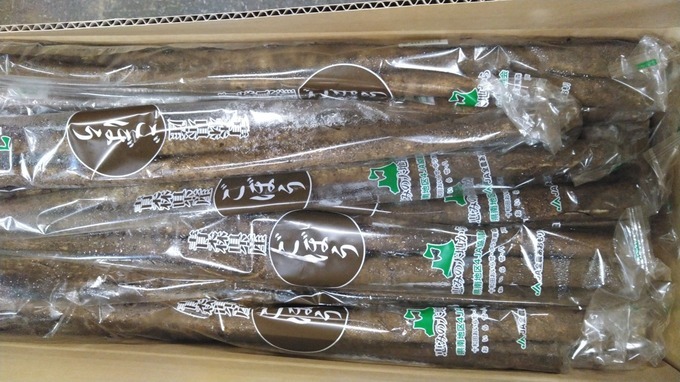
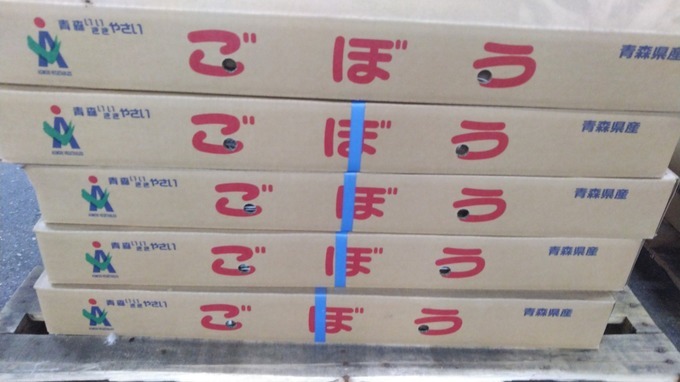
Burdock from Aomori Prefecture

【Type】
Arctium lappa L.
【Production area】
Aomori Prefecture (JA Zennoh Aomori, Southern 4JA Council)
【Origin of name】
It is said to be derived from the Chinese word "burdock", which has been introduced from China as a medicinal herb since ancient times. From ancient times, "牛" has been used for grasses that resemble "蒡" burdock from large plants.
【Main features】
Burdock is well known as a vegetable peculiar to Japanese food that is not customary to eat in foreign countries, but at the same time, it is also well known as a vegetable with a large amount of imports. The direct reason for the sharp increase in imports from 1998 was that domestic yields decreased by nearly 20% year-on-year due to low temperatures and long rains in the summer of the same year and typhoons in September and October, and prices doubled or tripled. Although it has soared above, it seems that this is not the only reason for the increase in imports. It seems that a major reason was that Japanese import trading companies and seedling companies had been focusing on burdock production in China for several years already in order to make China an export base for burdock. It seems that the reason for focusing on burdock production in China was that the production capacity of burdock began to decline visibly from around 1990 due to the aging of producers in Japan. Even if the domestic production capacity of burdock has declined, it does not seem that the production of burdock has decreased in all regions of Japan. According to the alic survey, when comparing 1990 and 2005, the productivity is certainly declining in most of the major production areas, but it seems that only Aomori Prefecture showed a remarkable increase. There are several reasons why Aomori Prefecture grew while imports increased. For example, in the summer, cold wind descending from the mountains (in the Tohoku region in summer) a cold Pacific wind blows from the Pacific Ocean, so rice cultivation is often hit by cold damage and is affected by the weather. The cultivation of difficult root vegetables is flourishing, the soil of kuroboku, which is rich in loam volcanic ash and rich in rot, is suitable for burdock production, or with a cycle of 3 to 4 years, such as yam, carrots, and garlic. It seems that crop rotation is possible. However, the biggest reason is that JA in the prefecture supported the production of burdock and also focused on its sales. Among them, JA Oirase seems to have actively worked on production support and sales. As a result, the JA jurisdiction (Misawa City, Rokunohe Town, Kamikita District) seems to have become the largest burdock producing area not only in the prefecture but also in the whole country. Going back about 15 years, the quantity and amount accounted for almost a quarter of the total burdock shipment volume and amount in Aomori Prefecture, and more than half of the total burdock sales volume and amount of all JAs in the prefecture. Most of these shipments are currently in wholesale markets such as the central wholesale market. In the Kanto region, we ship to central wholesale markets other than Tokyo and some local wholesale markets, centering on the central wholesale markets of Tokyo such as the Daejeon market and Toshima market, and in other regions, mainly the central wholesale markets. It seems that they are shipping in the form of sending the cargo to the local wholesale market. In particular, looking at the sales aspect of JA Oirase, it seems that the sales destination area of burdock extends from Tohoku to Kyushu and all over the country except Hokkaido. The center is Kanto, with 35% of total shipments directed to the region, followed by 30% to Kyushu and 25% to Tokai. The total amount of destinations to the remaining Tohoku and Kansai areas is 10%. Of course, it is not just shipping over a wide area, but from the perspective of promoting advantageous sales, it seems that we are always trying to ship according to the difference in demand in each region. For example, relatively thick burdock is mainly shipped to Kanto, and thin burdock is shipped to Tokai and Kansai. Most of the shipments are shipped to the wholesale market, although mutual trust has been established for a long time, but it seems that it is not the only one. In the case of the wholesale market, it always sells the entire daily shipment on the same day, accepts shipments of all standards, and the price in the wholesale market seems to be the basis of transactions outside the wholesale market. When it comes to direct transactions with mass retailers, I heard that the standard products required by the other party are limited to the quantity required by the other party, and in many cases, the price will be the same as the wholesale price in the wholesale market. There is. However, although it is not limited to JA, it seems that not all burdock sales were left to the wholesale market. He also actively cultivated sales channels other than the wholesale market. It seems that the aim was to stabilize the management of farmers in the jurisdiction and further strengthen burdock production by increasing stable transactions over a long period of time, that is, contract transactions as much as possible. On July 17, 2013, 4JA (Towada Oirase, Yuuki Aomori, Oirase, Hachinohe) in the south district of Aomori participated and launched the "Prefectural South District 4JA Council". Chinese yam, garlic, burdock, etc. are common. The aim is to increase the income of farmers by strengthening sales of core products, improving cultivation techniques, and jointly purchasing materials. About 30 people including the 4JA union leader and full-time director attended the establishment general meeting held in Towada City on the 17th. At the time of its inauguration, JA Hachinohe's union leader Sasaki was appointed as the chairman, and Yuuki Aomori's Ozeki union leader and Towada Oirase's Takegahara union leader were appointed. Okayama has a history of competing between production areas, but if he participates in Trans-Pacific Partnership Agreement, it will be a competition with overseas. There is a history of showing motivation to cooperate as a production area with a sense of crisis. JA Zen-noh Aomori was held on October 7, 2021 by the Kamitosan Wide Area Agricultural Promotion Association (Towada City, Misawa City, Yokohama Town, Noheji Town, Tohoku Town, Shichinohe Town, Oirase Town, Rokkasho Town, Rokkasho). Held a sales measures meeting in Towada, attended by JA staff and market participants. Reported that the planned shipment quantity for 2021 was set to 10200 tons. The growth of the 21st year production is set in consideration of the accumulated quantity from JA, considering that the roots tend to be short roots mainly in the M / 2M class from the result of the crop survey. Compared to the previous year's production, which had a smaller shipment volume than in normal years, the volume increased by 17%, and we decided to work on planned stable shipments to priority markets and implementation of distribution adjustments in consideration of regional / market characteristics and inventory quantity. It seems. In addition, it has been decided to expand the sales floor by conducting a promotion event by remote control at the store and a PR plan through TV programs, etc. toward the peak demand period. It seems that it was expected that the shipment volume of this prefecture's product would exceed the previous year's production as the stock of Kanto product was low. The Kamitosan Wide Area Agricultural Promotion Association was established in 1972 as the Kamikita Wide Area Vegetable Production and Shipping Promotion Association, and seems to have become the current organizational structure in 2018. The members seem to be 13 members of 9 municipalities, 3 agricultural cooperatives (Towada Oirase Agricultural Cooperative, Yuuki Aomori Agricultural Cooperative, Oirase Agricultural Cooperative), and Zen-noh Aomori Prefecture Headquarters. The Yasai Package Center, which is managed by JA Zen-Noh Aomori Prefecture Headquarters, seems to be expanding its yam, garlic and burdock cutting and packaging businesses by utilizing the stable supply from Japan's largest and most influential production areas. In particular, regarding yam, it seems that it has realized the securing of sales channels in urban areas by smoothly responding to the needs of actual consumers by increasing the number of items. It seems that the accumulation of responses to the needs of actual consumers has led to the expansion of the handling volume to a certain scale of 10% of the current system shipment volume. In addition to securing sales channels, these efforts seem to play an important role in understanding consumption patterns in urban areas. It is an easy package center that is expanding the handling volume, but it seems that there are still issues left. As for items other than yam, the handling volume is limited, so it seems that the response to the increase in demand of actual consumers is limited. It goes without saying that Aomori Prefecture is the production center of burdock, which boasts the largest shipment volume in Japan. Even in the prefecture, the Pacific side is the main production area, but there seems to be a reason why burdock cultivation is popular in this area. Normally, the climate is disadvantageous for the production of agricultural products, but it seems that it was perfect for burdock who prefers a cool climate. It is a gift of the wisdom of our predecessors. Burdock in this region is white and beautiful in color, has a strong scent, and is proud of being tight enough that the fiber does not get in the way. In addition, because it is grown in a cool climate, it requires less pest control and is very popular in the market. I would like to see an example of JA Oirase. For early spring sowing (sown from mid-April to early May), Tsuneyutaka burdock (Yanagawa Seeding Study Group Co., Ltd. (Omitama City, Ibaraki Prefecture): Gamma line to Riso yanagawa burdock at the Radiation Breeding Farm of the Agricultural Technology Research Institute in 1969. It is a fixed variety that has been cultivated through repeated selections at Ibaraki and Morioka farms. Riso yanagawa burdock (Yanagawa Study Group Co., Ltd .: Fruits and vegetables) is used for spring sowing (sown from early May to mid-June) after confirming that varieties that can be shipped early have characteristics that meet the breeding target in 1984. In 1948, Nagano, Chiba, Tokyo, Saitama, Aichi, etc. Obtain seeds from the prefecture and start a comparative study of quality. Among them, select one line obtained from Saitama and pay attention to the following points. Mainly cultivated). It seems that the harvest time is from the end of August to the middle of November when the long harvest begins, and the harvest is stored in the refrigerator and planned to be shipped until the middle of February. It is mainly sold to the market, but it seems that about 30 hectares of special cultivation of reduced pesticides and reduced chemical fertilizers are contract cultivation. It seems that they are shipped in two types: 10 kg cardboard and 4 kg plastic bags. Since the selection criteria are mainly for selling one or two bottles in retail, it seems that they are divided by the weight of one bottle and the number of bottles. In addition, since burdock has different tastes in each region, we ship burdock of the standard that the region prefers, mainly for small items with a thickness of M or more in the Kanto region and 2M or less in the west of the Chukyo region. Since the summer is cool in the Oirase area, there is little spraying of pesticides, and it seems that a system is in place to keep consumers relieved by keeping control records for all items. Among them, burdock has been certified by the "All-Agricultural Safety System" since 2004, and has undergone rigorous inspection by a third-party organization to meet consumer’s demands for safety and security, and is a production area where the whole picture of efforts can be glimpsed. It is also popular as a calorie and healthy food. Among them, it is widely known that it contains a large amount of dietary fiber. Dietary fiber has the effect of adsorbing carcinogens in the bowel, so it is expected to reduce the concentration of carcinogens and reduce the incidence of colorectal cancer. It seems to shorten the stagnation time of carcinogens. In addition, it has been clarified from the results of research that lignin in dietary fiber has an antibacterial effect and an effect of suppressing the development of cancer cells. In addition, it also excretes cholesterol, etc., so it seems to be effective in preventing arteriosclerosis. Furthermore, it is expected to be effective in cancer, constipation, stomach cramps, mouth ulcer, skin troubles, and recovery from fatigue.


Photo_22-04-13-07-12-37.651~2.jpg

Burdock produced in Aomori Prefecture has a good aroma and flavor, and is characterized by a crispy texture that is firm enough that the fiber does not get in the way. In addition, because of its high quality, it is highly evaluated by the market. The production volume is the highest in Japan, and the main production areas seem to be concentrated on the Pacific side such as Misawa City, Towada City, Oirase Town, and Rokunohe Town. The Pacific side has a cool summer climate with cold wind descending from the mountains in the summer, the number of pest control is small, and the heightened health boom in recent years has made it the most highly regarded and expanding production.


Photo_22-04-13-07-12-37.960.jpg

The season for burdock from Aomori prefecture is from September to November. Burdock seeds are sown from April to June and grown in the soil for an average of 130 to 150 days. After being harvested in early autumn, they are stored in the refrigerator and can be shipped almost all year round. In addition, burdock, which is a root vegetable, is a crop when "making soil" greatly affects the quality. In Aomori Prefecture, from fiscal 2007, "the healthiest soil preparation campaign in Japan (in Aomori Prefecture, in promoting the" aggressive agriculture, forestry and fisheries industry "that emphasizes sales from the consumer's point of view, the safety, security and quality that consumers demand. In order to strengthen the production area system that can stably produce and supply various agricultural products, all farmers in the prefecture will work on "healthy soil preparation" which is the basis of agricultural production in close cooperation with municipalities and related organizations. We are developing the "Japan's Healthyst Soil Making Campaign" aiming for this. From 2022, we will carry out the campaign based on the 3rd term "Japan's Healthyest Soil Making" promotion plan formulated in March 2022. Implementation. In order to prepare the soil environment where crops grow well, based on the soil diagnosis, organic materials such as compost and soil improvement materials are properly applied to the agricultural land, and appropriate soil management that combines deep cultivation and rotation is carried out. It seems that soil will be created with a good balance of physical, chemical and biological properties. In recent years, there are concerns that farmers' motivation for soil preparation will decline due to the aging of farmers and labor shortages. While the prices of fertilizers, fuels, agricultural materials, etc. are on the rise, the utilization of organic materials such as proper fertilization and compost based on soil diagnosis will lead to the practice of stable agricultural management. Soil) , and while conducting soil diagnosis and effectively utilizing organic resources such as rice straw and compost, it seems that they are working to create well-balanced and healthy soil according to the characteristics of crops and the condition of the field. This healthy soil allows the crops to grow robustly, producing good quality, delicious burdock by skilled farmers.


Photo_22-04-13-07-12-38.280.jpg

In Aomori prefecture, the cultivation of vegetables using the wide and abundant cultivated land and the cool summer climate has been a problem. The produced vegetables are shipped fresh to consumption areas such as Kanto and Kansai using pre-cooled storage facilities and highways. It responds to consumer preferences and needs because it produces less pests and does not use much pesticides. It seems that mainly root vegetables such as excellent japanese yam, garlic, and burdock, as well as vegetables such as green onions, tomatoes, cucumbers, and cabbage that were suitable for the summer. In addition, the production value of vegetables is the highest in the Tohoku region, and the shipment volume of garlic and burdock is the highest in Japan.

2025年1月26日日曜日

Dr. Shigeo Nagatomo (1901-1974): Aggregation, Degree Theory, Proportion, German Agricultural Management, Neoliberal Equilibrium Theory of the Thünen System, Founding a New School, Laying the Foundation for the Development of Modern Developmental Agricultural Management. Johann Heinrich von Thünen (1783-1850), Representative Works, Isolated Countries on Agriculture and National Economy: A Study on the Agricultural Effects of Grain Prices, Land Fertility and Taxes, 1826: Three field system in Southern Manchuria Shiki Agriculture, 1936 : Manchurian Farm Management and Pioneering Agriculture, 1944 : Farm Management and the Significance of Dispersed Cultivated Land Collectivization, 1957


Thunen's Agricultural Location Theory: As a farmer, Thunen came up with this theory while thinking about what kind of farmland should be cultivated in order to maximize profits. J.H. von Thunen (1826) The Isolated State on Agriculture and the National Economy. He considers the selling price, the wages, and the transportation costs as raw materials, of which the transportation costs, which are determined by the distance from the market, are the factors attributable to the land itself. For urban consumers, the value of each type of agricultural product is the same everywhere. Value of land = Reflected in land rent, difference from land rent in the furthest edge of the market area = positional difference in land rent, transportation costs, land rent, management method. Only low-cost (= extensive). If you don't manage it, the market price will be in the red. Farmers who are closest to the market can produce high-priced crops through intensive management that takes "time and effort" as much as they can save on transportation costs. For example, rice cultivation, which is representative of extensive low-cost agriculture in Japan, is most advantageous if it is grown and sold in the immediate vicinity of the market as it does not incur transportation costs. However, no matter how intensively it is grown, rice cannot be sold at a high price due to the high distribution volume. In the immediate market, there is no choice but to switch to agricultural management (horticultural crops) where higher prices can be expected. Agricultural management system: The rate of decrease in rent bearing capacity is steeper for intensive farming and gentler for extensive farming.

【Product name】
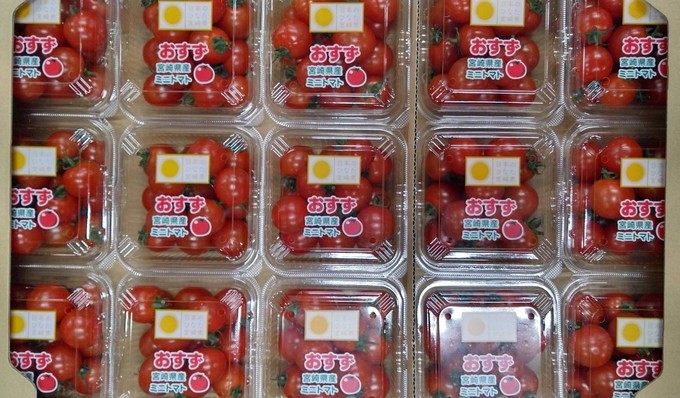
mini osuzu
【Type】
Solanum lycopersicum var. cerasiforme
【Origin of name】

Released by TAKII & CO., LTD. Around 1975. Small tomatoes: petit tomatoes have become widely known. However, although it was made in earnest in the early Showa era, it didn’t go into mass production.

【Production area】
Kawaminami Town, Tsuno Town, Koyu County, Miyazaki Prefecture (JA Osuzu, JA Miyazaki Economic Federation)
【Main features】

JA Osuzu has production areas such as Kawaminami Town, Koyu District, and Tsuno Town, which are representative of Miyazaki Prefecture. However, due to the aging of farmers and the spread of crops (lettuce, sweet corn) that compete with carrots in cropping season, there are 57 members (average age 48) and the cropped area has decreased to 89 ha. In many cases, many farmers cultivate carrots in the area as a follow-up crop to rice, and the cultivar for fruit juice is "Kuroda Gosun'' by the Nagasaki Gosun Ginseng Incubation Association because of its color tone. It seems to be From mid-August to mid-September, when the rice harvest is finished, 40,000 to 45,000 grains are sown per roll (row width 120 cm, spacing 7 cm, planting 4 rows), and harvesting starts in early December. It seems that it will be completed by the beginning of March. The actual yield was 3.7 to 3.8 tons against the target of 5 tons per roll (management policy of the promotion center). In addition, most of the harvested carrots are sold to Miyazaki Prefectural Agricultural Cooperative Fruits Juice Co., Ltd. through systematic joint sales through each agricultural cooperative and Keizairen. According to the standards set by the Miyazaki Prefecture Horticultural Brand Inspection Association, it must be bright red, have a sugar content of 7.5 degrees or more, be free from toxic contamination such as residual pesticides, have a length of 3 cm to 8 cm or less, and a length of 10 cm to 23 cm. It seems that it is only defined as a healthy fruit and does not have a class division like market shipment). As a result, the post-harvest adjustment work of the farmers is considerably simplified, and it seems that the shipment is also loaded with soil in a 1-ton container rented by Miyazaki Prefectural Agricultural Cooperative Fruits Juice Co., Ltd. These standards and the simplification of shipping adjustments have reduced the working hours per roll to about 84 hours, compared to 237 hours in Chiba Prefecture, which is also a carrot-producing area in winter. This seems to make it possible to deal with processing raw materials at a level below the market price. Miyazaki Prefecture Agricultural Cooperative Fruits Juice Co., Ltd. has factories in Koyu District (headquarters factory), which is the raw material production area for carrots, and Miyakonojo and Kobayashi districts. Imported in a 1t container. From December to March, which is the harvest season for winter carrots, raw carrots are received, washed, sorted, blanched, refined, and stored frozen as "carrot puree." and sold to other beverage manufacturers. In addition, the company uses 5% of the carrots procured as raw materials for its own brand products, and the rest is used as raw materials for brand products of beverage manufacturers with which it has an Original Equipment Manufacturing (Manufacturer) contract. In addition, many winter carrot production areas in Miyazaki Prefecture ship a part of the harvested amount for processing raw materials on the premise that they are generally shipped to the market for raw consumption. Agricultural cooperatives and other related entities work together to determine the planting area based on the procurement plan of the user, Miyazaki Prefecture Agricultural Cooperative Fruits Juice Co., Ltd., and adopt a system for procuring harvested products. In this way, in a system that is highly dependent on transactions and closely linked, there is no problem if production is carried out according to plan, but if crop conditions change due to unseasonable weather, it is likely to lead to raw material procurement problems. It seems that there is also. JA Osuzu is located along the Hyuga Sea in the middle of Miyazaki Prefecture. To the west you can see Mt. Osuzu, the origin of the name of JA. The land of Osuzu, which is nurtured by the tropical sun and greenery, produces a variety of vegetables and fruits throughout the year. It seems that the agricultural and livestock products produced here are shipped not only within the prefecture but also all over the country. Osuzuyama Prefectural Natural Park centered around Mt. Osuzu, and a group of waterfalls including Yatogi Falls are located within the jurisdiction. On the other hand, there are fishing ports in Kawaminami and Tsuno on the coastline, and seafood is abundant. Tsuno's sea urchin'' and Kawaminami's "Lagocephalus wheeleri Abe, Tabeta & Kitahama(Unlike tiger puffer fish, it has a supple white flesh similar to chicken tenderloin. If you lightly sear it, grill it, and eat it with ponzu sauce, the elegant flavor will spread in your mouth.)'' are particularly famous, and I sometimes eat them. There is also a surfing center in Ikurahama Nature Park, and the straight coastline seems to be one of the hot spots for surfers both inside and outside the prefecture. Also, Tsuno wine, which is brewed from locally produced grapes, has received high praise overseas and is very popular, and during the sales period at Tsuno Winery, which overlooks the Hyuga Sea, it is crowded with many customers. The Miyazaki Prefecture brand certified crops seem to strive to reduce pesticides through thorough cultivation management such as the use of insect nets, insect repellent sheets, and natural pesticides. In addition, the food development laboratory of Keizairen conducts regular inspections of residual pesticides to check whether pest control is appropriate. Participate in the ODD movement (appropriate application of organic matter, deep cultivation, soil diagnosis). Do not apply excessive fertilizers, and apply appropriate fertilizers necessary for the growth and harvesting of crops. Cherry Tomatoes: Acquired brand production area certification on October 22, 2001, product brand name: "Miyazaki Eco Cherry Tomatoes", Mini Tomato Subcommittee 35 producers Area 12.5 ha. Mini Tomato Group 11 producers Area 7.4 ha. The JA Osuzu mini tomato section usually begins shipping Cherry Tomatoes in late September. The variety is Summer Senka Cherry Tomatoes. It seems to be characterized by a glossy dark red color and a beautiful spherical fruit shape. The 2020 crop escaped damage from the typhoon, and it seems that the fine weather continued and the growth was good. In the subcommittee, 36 people planted Summer Senka Tomatoes and Kosuzu Cherry Tomatoes on 13.5 hectares. The first peak is around mid-November, and it seems that 2021 will reach its peak in April-May. According to Takii & Co., Ltd., the cherry tomatoes "summer senka tomatoes" to be introduced this time is a deep red and glossy fruit color. The fruit color is bright red and seems to have a beautiful luster. The fruit weight seems to be 15 to 20 g. The fruit shape is a beautiful sphere and should be well-matched. It has a high sugar content and seems to have a particularly good taste. The sugar content is 8 to 10 degrees, which is stable from the lower stage to a higher sugar content than "Coco cherry tomatoes", and it seems that the taste is particularly excellent due to the fine meat quality. Also, it is easy to cultivate and it seems that there are few glasses. The grass is medium-strength and gentler than "Coco cherry tomatoes", and it is easy to cultivate with less occurrence of abnormal main stems (glasses). From Takii Seedling Co., Ltd., in principle, the market is cultivated in a facility. It is suitable for all cropping types such as controlled cultivation, but it seems that it is always better to carry out rain shelter cultivation (facility cultivation) in order to prevent fruit cracking and improve quality in economic cultivation. In long-term cultivation, it seems that the amount of nitrogen fertilizer applied to the original fertilizer is 10 to 15 kg per 10 a when a large amount of original fertilizer is used for long-stepping of 15 or more stages. The nitrogen component is Coco medium: Coconut fiber is crushed into small pieces to remove salt. It looks like soil, but it feels soft to the touch and can contain more air than soil. It contains a lot of air. It is important to include it, and it seems that the roots can grow quickly by supplying a large amount of oxygen to the rhizosphere. Rock wool is another famous medium that uses a solid medium for hydroponic cultivation. It is highly breathable and seems to be one of the most suitable mediums for hydroponic cultivation. The raw material is slag (when the target metal is obtained from ore or crude metal, vein stones and impurities are separated from the metal in a molten state. The amount is increased by 10 to 20% from mainly siliceous oxide melts), rocks, and limestones produced by adding a solvent for the purpose, which are melted at high temperature and fibrous. The best rootstock is a variety that has stamina until the latter half of cultivation. The fruit color is deep red and has a beautiful luster. The fruit weighs 15 to 20 g, and the fruit shape is a beautiful sphere with a good impression. We ship products with good sugar content and acidity, and fine meat quality. It seems that the production area is forcibly cultivated in the coastal area in the fall and winter, and cultivated in the high cold mountainous area to avoid rain in the summer and autumn, and shipped year-round. In addition, Ruyobetsu Village is raising seedlings in a dedicated green house installed in a well-ventilated and well-drained place. Put up an insect net, raise seedlings for about 40 days, and plant seedlings so that flower buds can be seen. It seems that water is carefully managed until it takes root, and watering is performed in small increments and more frequently from the fruit enlargement period to the harvest period. It seems that he is trying to remove the leaves so that the fruits are well exposed to sunlight. Cf Kosuzu Cherry Tomatoes from Vilmorin Mikado Co., is a mini tomato with less cracking and good taste. It has medium leaves with short internodes and strong grass, but it is insensitive to soil moisture and fertilizer, and it seems to be easy to cultivate because it is difficult to grow stems that do not have cores or abnormal stems. The flower clusters often branch into 2-3 branches near the 3rd and 4th stages, and have excellent fruit setting, with 20-25 fruits per flower cluster. The fruit weight is 15-20 g, and the fruits are well-aligned and labor-saving. The fruit color is dark red and slightly glossy, and the packaging is very beautiful. The taste is sweet and rich and delicious. The fruit is hard and has excellent workability during harvesting and adjustment, as well as transportability and shelf life. There seems to be very little splitting. It is also highly resistant to ToMV (Tm-2a), wilt race 1, and leaf blight (Cf9). Moderate disease resistance to root-knot nematodes. Moderately resistant to spot disease. Appears to be suitable for long wintering, semi-forcing and controlled cultivation. On November 21, 2022, at the request of the Promotion Bureau, JA Osuzu held an exchange meeting for new agricultural trainees and three students from Takanabe Agricultural High School outside the prefecture (Shizuoka Prefecture, Tokyo Prefecture, Kyoto Prefecture). It seems that the purpose of the training greenhouse is to deepen the understanding of agriculture in Miyazaki Prefecture through the experience of harvesting green peppers, the introduction of new farming systems, and interaction with trainees, and to motivate them to work in agriculture in the prefecture in the future. In the same year, on Sunday, November 27th, the 5th JA Osuzu Harvest Festival was held at the Fujimi Athletic Stadium parking lot in Tsuno Town. This was the second joint event with the Tsuno Town Industrial Festival. Blessed with fine weather on the day of the festival, it was a perfect day for the festival, and it seems to have gained popularity. It was held for the first time in three years due to an epidemic, but it seems that about 5,000 people came to the venue and showed a lively atmosphere. From the same JA, it seems that the livestock department, the agriculture and gardening department, the youth department, and the women's department have opened stores. Among them, the livestock department sold beef and pork at special prices, and it seems that long lines were forming even before the festival started. It sold out in about an hour from the start and was a great success. Sales of fresh vegetables, fried soba, curry, and demonstration sales of joint purchases are also popular. On the side of the Tsuno Industry Festival, Saroma Town, Hokkaido, a friendship city of Tsuno Town, sells grilled scallops. It seems that this place is very popular and there was a line. Kawaminami Town, Koyu District has a total area of 90.12 km2. Located almost in the center of Miyazaki Prefecture facing the Hyuga Sea, it has a population of 15,501 (as of May 1, 2018). It boasts one of the largest agricultural production volumes in the country. Based on the townspeople's rich nature and human kindness, it seems that they are aiming for "town development with a new frontier spirit" in order to remember the strong pioneering spirit of their predecessors and further develop. The Kawaminami Wetland is popular as a wetland that spreads out in the Shimbashi district in the central part of Kawaminami Town. It is close to Route 10, about 50 meters above sea level, and has an area of about 33,000 square meters. It was designated as a national natural monument in 1974, and there are 78 families and 298 types of plants, of which about 110 are wet plants, of which about 50 are rare plants. Around 1989, eutrophication progressed so much that the water surface of Shimbashi Reservoir could no longer be seen, and the risk of loss was high if things continued as they were. Currently, improvement of the wetland environment is progressing, and it seems that the growth and restoration of various wetland plants have been confirmed. In particular, Japan's only wild "Hyugahoshikusa", which was thought to be extinct, has been revived for the first time in about 50 years, delighting the eyes of visitors. In addition to plants, we also confirmed the inhabitation of "Japanese killifish". Since the observation trail was constructed, visitors seem to be enjoying a stroll in the quiet environment. I heard that the patients of the adjacent hospital are also taking a walk for rehabilitation. Tsuno Town, Koyu District is a small town overlooked by the Pacific Sea of Hyuga and Mt. Osuzu. Mt. is the first waterfall group in Japan to be designated as a place of scenic beauty, with more than 30 waterfalls in the clear river that flows between the trees full of greenery. The town is also called the "City of Agriculture" and produces many delicious agricultural and livestock products. The Tsuno wine made from the specialty "grape" seems to be a proud wine that continues to win awards in domestic and overseas competitions. Tsuno Shrine, the Ichinomiya of Hyuga Province, surrounded by the forest of the shrine. It is a historic shrine where Emperor Jinmu prayed for when he moved to the east. In addition, the roadside station "Tsuno", which is connected to Tsuno Shrine by a red good luck bridge, seems to be bustling with many people who come here to buy fresh local vegetables, fruits, meat and fish, and their processed products. It is said that Tsuno Shrine was built when Emperor Jinmu visited Miyazaki six years before he ascended the throne, praying for peace in the land, peace at sea, and prosperity in war. It seems that Omitaka no Mikoto (also known as Okuninushi no Mikoto), who is famous for the myth of "The White Rabbit of Inaba", is enshrined as a deity. There are various Shinto rituals in the company, and it is full of highlights. First of all, before entering the precincts, there is a stone along with the offertory box. This is the "god's stone" that was set up for the Ishimochi Shinji ritual, and it is said that if you visit the shrine while holding this stone and place it in the stone store behind the main shrine, your wish will come true. In addition, stroking the Daikoku-sama statue with wishes is expected to bring healing from illness and prosperous business. It is said that the "patting rabbit", which is derived from the white rabbit of Inaba, has benefits such as good health. Tsuno Shrine also has a wonderful view, and a wide approach lined with trees seems to welcome visitors. Just walking in the orderly and beautiful environment cleanses the soul, but it seems that the priests spend more than an hour cleaning every morning. Throughout its long history, it has been valued by the locals as a place of devotion that has been cherished while being involved with many people. Tsuno Town Kawakita is located in the central part of Miyazaki Prefecture, in the Tsuno River Basin, and faces the Sea of Hyuga to the east. During the Edo period, it was the territory of the Takanabe clan, and it seems that it consisted of Kawakami Township (6 villages) and Tsuno Town (machiba) out of Nobeppu Rokugo, which was controlled locally. Former high and former territory (a domain that existed in Hyuga Province. Present-day eastern part of Koyu County, Miyazaki Prefecture (Takanabe Town, Kawaminami Town, Kijo Town, Tsuno Town, Mimitsu in Hyuga City), Kushima City, and Miyazaki City (Uriuno and Kuraoka areas). Part), owned Kunitomi Town (Kiwaki)), Kawakami Village and Miie 3,867 koku of rice. Mr. Hirabe, the author of Hyuga Topography, surveyed this village in June 1878. According to this book, the village is about 3 ri from east to west, 2 ri from north to south, 18 towns, 1,021 households, and a population of 5. , 047, 580 cows, 1,849 horses, and 53 Japanese boats. It seems that Tateno 25 and Tsuno Town were by far the most numerous towns. In this "Hyuga Topography", Tsuno Town is one character of Kawakita village, but it seems that Tsuno Town was under the control of the townspeople in the Takanabe clan in the Edo period and was distinguished from the village of Kawakita. Miyazaki Prefectural Ordinance No. 17 of 1889 stipulated that Tsuno Town and Kawakita Village would be merged into a rural village, and administratively it was not included in Kawakita Village. From 1920, Miyakonojo Village became Tsuno, and Kawakita became a section of village of Tsuno Town. In 2004, the JA Osuzu Mini Tomato Group was awarded the 34th Japan Agriculture Award for its efforts to create a production center through environmental recycling-oriented cultivation that unites the region. The "Miyazaki Eco Mini Tomatoes" produced by this group are so popular that they sometimes fail to ship in time for their intense flavor and consistent quality, as if they were born from the tropical sun. It's safer and more secure. Most of the 38 members of the division were certified eco-farmers. The fact that we formed a subcommittee was because the quality was so uneven that it was not recognized as a production area. While discussing with everyone, it seems that if they were going to do it anyway, in order to cope with the price slump due to imported vegetables, they started making ideal mini tomatoes to make something that was completely safe and secure that could never be imitated in other countries. It seems that there was also a thought that cheap is not good. The biggest point is making soil. The Green Gaia Experimental Plant (reduced pesticides and organic farming), which was built by Tsuno Town and others, is one of the trends, but from the standpoint of farmers, we are prepared to take on a lot of labor. The reason for the group's success is that we were able to share the goal of creating a reliable production area with the community. By using , the soil becomes richer than you can see, and environmental recycling cultivation that returns local garbage to the soil is also realized. It seems that they do not use chemicals to exterminate pests that occur in the soil, and use solar heat disinfection that keeps the vinyl greenhouse closed and high temperature during the midsummer off season.


1673735873976~2.jpg

The JA Osuzu Mini Tomato Subcommittee received the 34th Japan Agricultural Award in recognition of its creation of a production area through environmental recycling-oriented cultivation that unites the region. The Miyazaki Eco Cherry Tomatoes produced by this group boasts such a strong flavor and consistent quality that it is as if they were born from the tropical sun, and are so popular that they sometimes cannot be shipped in time. Practicing reduced pesticide cultivation that is significantly stricter than the prefectural standards. At that time, all 38 members of the department were farmers who were certified as eco-farmers. Good soil is essential for good agricultural products. In collaboration with the "Green Gaia Experimental Plant" constructed by Tsuno Town, Koyu District, etc., the fungal fertilizer made from household garbage produced here will enrich the soil in a way that makes it unrecognizable, and the local community will grow. Environmental recycling type cultivation that returns garbage to the soil is also realized. Green Gaia, which Tsuno Town has been experimenting with since 2000, is a processing plant that utilizes fermented raw garbage to create soil. Approximately 400 kg of raw garbage per day, which is transported from specific businesses such as supermarkets, is fermented for half a day. It is used in two ways: applying it directly to farmland as a soil improver, and mixing it with livestock manure to make fully matured compost. When they return to the soil, the field is covered with pure white mycelium in about 6 days. It's called fermentation with the soil, and it seems that the use of pesticides and chemical fertilizers will inevitably decrease because the roots of the crops grow a lot. JA's tomatoes and cucumbers, as well as the grapes that make Tsuno wine, are also grown using this method. Good-tasting crops will become the town's brand, and combustible waste will be reduced. In the future, it is expected that awareness of resource recycling will increase, such as promoting the use of this technology by farmers.


1673735877978~2.jpg

We strive to reduce pesticide use through thorough cultivation management, such as the use of insect nets, insect repellent sheets, and the use of natural pesticides. In addition, the food development laboratory of Keizairen conducts regular inspections of residual pesticides to check whether pest control is appropriate. Participate in the ODD movement (appropriate application of organic matter, deep cultivation, soil diagnosis). Do not apply excessive fertilizers, and apply appropriate fertilizers necessary for the growth and harvesting of crops.


1673735883512.jpg

The terrain consists of mostly flat plains and mountainous areas facing Mt. Osuzu. In addition, the temperature is warm throughout the year with an average annual temperature of 17.8°C, and many agricultural products are produced in the jurisdiction due to the natural conditions suitable for agriculture.

2025年1月23日木曜日

The oldest soy sauce brewery in Noda City has been passed down through the Iida clan of the Takeda Kaigenji clan. Kawanakajima Tamari aged soy sauce was started in 1661 by the 19th generation Hyozaemon Takahashi. The following year, in the second year of the Kanbun era, Shichizaemon Mogi started making miso, and in 1822, Gonbei Konno started brewing local soy sauce in Imakami, Umezato Village - Niwa Juroemon Tadaaki (Chozan Issai) Tengukyoron, 1727


The Osugi faith, whose main shrine is Osugi Shrine in Awa, Inashiki City, Ibaraki Prefecture, is also known as "Amba-sama" or "Osugi-sama," and has been widely worshipped around the Tonegawa River system and along the Pacific coast as a god for safe water traffic and the warding off epidemics. In Noda City, sandwiched between the Tone River and the Edogawa River, Osugi festivals are held in many areas in the summer, and the faith is still alive in people's lives.


【Product name】

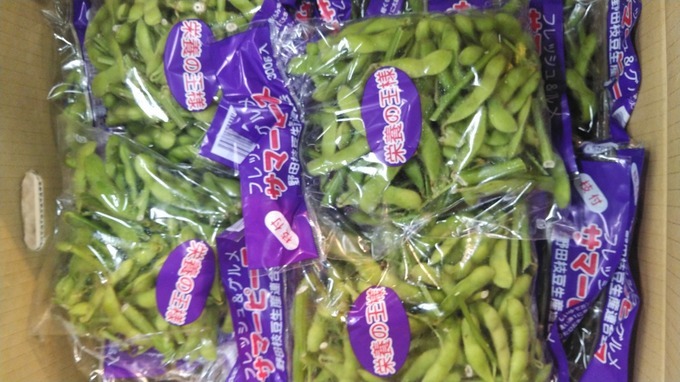
Summer Peace

【Type】
Glycine max (L.) Merrill
【producing area】
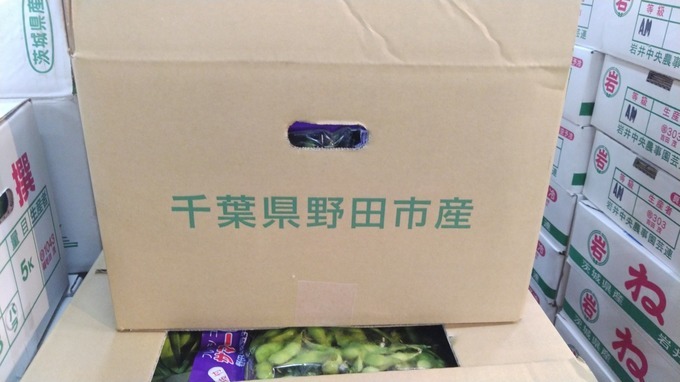
Noda City, Chiba Prefecture (Noda Edamame(green soybeans)Producers Association)
【Origin of name】

It is believed that it was eaten during the Nara and Heian periods. “Green soybeans” are sold as they are attached to the branches, and are called “Edamame” when they are peeled off from the branches. Summer part or fragment. Or is it a piece of summer?

【Main features】

The regular Chiba Prefectural Assembly began a question on June 2, 2022, and Governor Kumagai seems to have stated that "we will promptly prepare for households with many children so that they can implement it within the year" regarding the free school lunch fee. In cooperation with the prefecture's municipalities, it seems that they are aiming to implement it within the fiscal year by compiling the requirements for households to make it free of charge. For households with many children, yard regulations are also being considered. Since 1772, he has been engaged in the soy sauce brewing business under the name of Kashiwaya, and in 1887, the 5th generation Shichiroemon Mogi was appointed as the president when the Noda Soy Sauce Brewing Association was formed. In 1822, the first Fusagoro MOGI abolished his own business and became the guardian of the Mogi Shichirouemon family. Noda City, Chiba Prefecture : The area is 103.55 km2, and topographically, the Tone River and the Edo River branch off at the northernmost tip of the city, and the Tone River to the east, the Edo River to the west, and the Tone Canal to the south surround the river on three sides. It is about 60 km around this embankment, and it is well known as a natural environment that is ideal for walking and jogging as a cycling course. Form a town rich in history, culture and nature. Looking back on history, the northern part prospered around the castle of the Sekiyado Domain, which had a river barrier as the gateway to the big city of Edo, and the southern part was the soy sauce brewing industry that supported the food culture of “Edokko” along with agriculture. In addition, the soy sauce brewing industry has developed, and even now, the urban area is dotted with buildings from the Taisho Era to the early Showa Period, and it is very emotional. In addition, there is a memorial hall that honors former Prime Minister Kantaro SUZUKI, who led the Pacific War to the end, and Mr. Kinjiro SEKINE, the 13th master of modern shogi, who has established a system of talented masters. The Edo Shogunate placed great importance on Sekiyado Castle and placed Fudai Daimyo in Sekiyado for generations. It is well known that the feudal lord lasted for eight families and 23 generations until the end of the Edo period. Among them, Kuze's reign was the longest, and he occupied an important position in the shogunate as he took important positions such as the old and middle ages. Sekiyado Castle in the Edo period hardly exists, but there is a “Chiba Prefectural Sekiyado Castle Museum” that imitates the castle tower, and I have visited it several times. While introducing the history of river improvement and water transportation under the theme of the history of the clan and “Rivers and related industries,” it is an important facility for exhibiting materials related to the people in the basin and the rivers and learning about their hometown. Mr. Kantaro SUZUKI was born in Fuseo, Izumi Province (currently Sakai City, Osaka Prefecture), the eldest son of the Sekiyado Domain, Yutetsu SUZUKI(His maiden name is KURAMOCHI, commonly known as Tamenosuke.), and returned to Sekiyado in 1872. It seems that he moved to. In 1923, he was admiral of the Navy, and later served as Commander-in-Chief of the Allied Fleet and Chamberlain of Emperor Showa. He was appointed Prime Minister on April 7, 1945, leading the Pacific War to the end of the war, and although he was in office for only four months, he returned to Sekiyado after a major role and lived a quiet life. In his hometown, it is a famous story that he started the “Agriculture Study Group” focusing on dairy farming using grass on the riverbed and held lectures by specialized lecturers by taking advantage of the characteristics of the area. Therefore, Noda City is still active in dairy farming and takes root in the area. The “Kantaro Memorial Hall” was opened in 1963 to widely introduce the achievements of the old man, and many relics such as formal wear and daily life items are exhibited, fascinating as a valuable museum. Sekine has been a strong shogi player since he was a child, and by the time he entered elementary school, he had no match for the locals. At the age of 11, he moved to Tokyo with the aim of becoming a professional shogi player, and after repeated training, he was promoted to 4th dan in 1891 and 8th dan in 1905. It was around this time that the third match with Sankichi Sakata, who became the model for the movie “Osho(VS Sankichi SAKATA; 吹けば飛ぶよな 将棋の駒に: コロムビアレコード, The lyrics are Yaso Saijo, the composition is Tooru FUNAMURA, and the song is Hideo MURATA, released in November 1961.)”. This is a Japanese movie released on October 18, 1948, and it is no longer produced. In 1921, after becoming a 13th generation master at the age of 53, he abolished the hereditary system and the whole life master system that had continued for 340 years, and established a championship master system. He laid the foundation for the prosperity of today's shogi world, such as establishing the Japan Shogi Taiseikai, the predecessor of the current Japan Shogi Association, and is widely known as the “father of modern shogi.” As an information dissemination base for shogi, the “關根 Meijin Memorial Hall” constantly displays about 40 items related to masters, and holds about 2,400 books on shogi from the Edo Period to the present day. Next to the memorial hall, there is a 52 tatami mat room where anyone can easily point to shogi, which is unbearable for fans. もの知りしょうゆ館 : At the museum opened by “Kikkoman” in the factory, you can enjoy learning about the color, taste, and aroma of soy sauce while observing the factory until the soy sauce is made. 野田市教育委員会(鶴奉) 2021 “令和2年度 野田市内遺跡発掘調査報告” : 上野馬込遺跡, 第15次(花井新田字三丁歩), 宅地造成, 集落, 古墳 / 近世(細分不明) 時代. 山崎貝塚周辺遺跡, 第25次, 分譲宅地, 集落, 縄文時代, 縄文時代土器. 中野台貝塚, 第5次 / 本調査(字行人谷), 個人住宅, 貝塚, 縄文時代, 縄文時代竪穴建物1, 土坑, Pit, 縄文時代: 土器, 縄文時代: 石器. 岡部館跡(山崎字梅台), 宅地造成, 城館, 中世(細分不明), 近世(細分不明) 時代, 古墳時代土坑1, 縄文時代土器, 石器, 古墳時代中期土師器. 東新田野馬土手(山崎字殿山), 戸建分譲, 中世 (細分不明), 近世(細分不明) 時代, 中世~近世野馬堀1. 山崎貝塚周辺遺跡, 第26次, 個人, 集落, 縄文. 岩名新屋敷遺跡(字宮田), 個人住宅, 縄文 / 中世(細分不明), 近世(細分不明) 時代, 中近世溝1 , 縄文時代土器, 中近世土師質土器. 溜井遺跡, 第4次(吉春字溜井), 駐車場, 縄文 / 中世 (細分不明), 近世 (細分不明) 時代, 中近世塚1. In the early Edo period, the goods transportation route from Choshi Port to Edo via the Tone River passed through Omori, Shirai, Kamagaya, and Yawata by land between Kinoshita and Hongyotoku. Due to the improvement of the Tone River channel and the renovation of the Edo River, boat transportation was opened and this gradually became more important. Kinoshita and Hongyo Tokuma were loaded with horses, and there was a process of switching to boat transportation. In 1716, the boat routes of Fusa, Matsudo, and Edo were developed, and the land routes gradually declined, and villages petitioned the shogunate. As the population of Edo increases, vegetable production in nearby rural areas expands. The production areas expanded in parallel to the plateau area in the western part of Edo and the island field area in the east, but the production area in the eastern part expanded from Adachi / Minami Katsushika to Higashi Katsushika. One of the ways of spreading was to head for Yawata and Kamagaya by land, and the other was to head for Ichikawa and Matsudo by waterway. At the end of the Edo period, the routes between these production areas and Edo were complicated in the western part of Higashi Katsushika, and it seems that boat transportation was made from Yamanaka / Funabashi and bad transportation was made from Ichikawa / Matsudo. The types of vegetables produced are those from nearby production areas that have expanded their production areas, but many of them have already been made for private use in the production areas of Higashi Katsushika. Most of them lack records of introduction, but some are said to be folklore. In 1801, Chozaemon Hanazawa of Yabashira Village Ohashi introduced Mitsuba from Mizumoto Village (currently Katsushika Ward) and started cultivation, and from 1804, Mr. Magoemon Ukiya of Yabashira Village Wanagaya started cultivating Mitsuba. With shipments to Senju, the nearby production areas have expanded from the island fields to the plateau areas. It is said that the shipment to Senju was done with a crap and a shoulder. In 1803, Ichikawa made melons, watermelons, radishes, eggplants, etc. and sold them to Edo through the banks of the Gyotoku River by boat transportation. Vegetable production in Higashi Katsushika seems to have increased sharply during the Kyoho year in response to the increase in demand in Edo. According to Ichikawa, “Around this time, the demand for vegetables in Edo increased, and local farmers tried to increase their productivity by using lower fertilizer to meet this demand.” From Genroku to Hoei, farmers near Edo used to fetch the inhabitants' lower fertilizer for free, but after that, they were charged a fee and changed to purchasing. The landlord / landlord owns the right to sell the lower fertilizer, and sells the actual product to the merchant, who sells the purchased lower fertilizer to the suburbs. It seems that the ship was called “Kasai ship”. The shogunate is monitoring the sale of manure, and it is recorded that in 1792 the shogunate ordered the Kasai ship to reduce the price of manure. The use of manure in vegetable cultivation gradually became widespread, for example, in 1838 in Higashi Katsushika: It is said that the peasant family of Kashiwai village can know by making melons, watermelons, potatoes, and radishes and selling them to Edo, and relying on the Shimogoe(Human manure as fertilizer)Ship (Kasai Ship) for fertilizer. In addition, Taro, melon, and watermelon were mentioned as products for sale, and transactions were not limited to the suburbs of Horie, Nakayama, and Onikoshi villages, but also to Asakusa and Honjo. Instead, he said he purchased manure, dried sardines, oil cake, etc., indicating the establishment of a nearby vegetable producing area. As the range of Shimogoe purchases expanded and disputes arose between farmers and traders, 1846 “The Shogunate set the price of manure with officials under the control of the account magistrate. It covers the territories of Hirayanagi, Yakota, Fuchie, Nishikasai, Higashikasai, and Gyotoku.” Kumaji Shibutani of Matsudo Shimoyakiri obtained green onion seeds from Shimazaki of Shibamata, Kanamachi Village, Minamikatsushika District and started cultivating them in 1852, on the opposite bank of Shimoyakiri across the Shiba or Edo River. The variety is "Senju welsh onion", and Kanamachi village has already been producing green onions. In addition, until the end of the Edo period, Mitsuba in Higashi Katsushika District was mostly softened in winter, and it seems that intensive vegetable cultivation was being carried out rather than extensive root mitsuba cultivation. For the production of vegetables in Higashi Katsushika, the Meiji era was an era in which the production area was greatly advanced in response to the increase in demand for vegetables in Tokyo under the capitalist economy. Not only has the variety and quantity of vegetables increased, but we have also endeavored to introduce new varieties of the same type, incorporated hotbed cultivation into the cultivation method to extend the shipping period, and introduced crop rotation to centralize production / shipment and land use. And efforts to promote rationalization were used as food. Quantitative production had already progressed in the first year of the Meiji era, but as the number of kansho, watermelon, radish, carrot, burdock, eggplant, melon, cucumber, squash, etc. gradually increased, onions, watermelons, melons, ginger, etc. Production of melons and other products increased fashionably due to an increase in supply and demand. It was Mitsuba that surged in Hongo in the first year of the Meiji era, and cultivation increased in Takagi and Kamagaya centering on the eight pillars, and it was sold to the Capital Area Tokyo market and local merchants, and its production area was permanent. From the 1887 to the 1889s, vegetable production in this area increased significantly because the population of Tokyo increased and demand increased in the wake of the Sino-Japanese War, and the opening of the Joban Line in 1896 led to Matsudo. The rapid growth of local vegetable cultivation and the opening of the Sobu Line in 1897 increased vegetable cultivation in the southern part of Higashi Katsushika. Noda City, located at the northernmost tip of Chiba Prefecture, is a major edamame producing area. It is said that edamame cultivation began in Noda City in the mid-1950s. Since edamame loses its taste quickly after being harvested, it has built its position while taking advantage of its proximity to Tokyo, which is a large consumption area. It is well known that the city is enthusiastic about the “Noda Edamame” brand. The cultivated area is as large as about 300 ha(3 km2, 3000000 m2, 30000000000 cm2, 741.3ac, 1.1583 mi2, 3588000 yd2, 32280000 ft2, 4650000000 in2, about 907500 坪, about 90750000 勺). Cultivation in the city began in the latter half of the 1945s, and at that time many farmers were growing soybeans for making their own miso. The food situation has gradually recovered, so it seems that they have switched from soybeans to edamame. In the city, we used to collect green soybeans such as “Nishiarai and Mikawashima” on behalf of a seedling supplier, so some farmers use these varieties to grow green soybeans in the Asahi area of Noda City. It was the Mefuki Shipping Association in Noda City that systematically cultivated and shipped the products in 1957, and then spread throughout the city centering on the Asahi district. At that time, most of the plants were sown directly from early April to mid-April and harvested from late July to early August. It was in 1965 that transplant cultivation was carried out using Okuhara No. 1 and early-out cultivation was attempted, and in 1968, multi-cultivation was also carried out. The city's edamame is characterized by the fact that part-time farmers are as powerful as full-time farmers. Cultivation is a relatively reasonable crop rotation system with spinach from autumn to spring and green soybeans at high temperatures in summer. In addition, since there are more than 85% of dual-purpose farmers, it is not suitable for those that require advanced technology such as fruits and vegetables. In this respect, crop rotation of green soybeans and spinach is technically and economically suitable for the city. There seems to be. The current cropping type is said to be cultivated in four cropping types: tunnel and mulch, tunnel cultivation, mulch cultivation, and open field cultivation. Below, most of them are transplanted and cultivated. In this transplanting cultivation, the previous crop has a fertile field for cultivating leaves such as spinach, which helps prevent the growth of green soybeans and overgrowth. Most of the varieties are “Okuhara Wase” and “Hakucho” released in June, and many varieties such as “Toya”, “Sappro Midori” and “Yukimusume” have been introduced recently in July. Sowing is carried out sequentially from the beginning of March, and the seedling raising period is around 20 days. The final sowing is in early June, and the quality of edamame in August deteriorates due to damage such as Asphondylia yushimai(Adults lay eggs one by one on the inner surface of young pods at night. The damaged pods and the grains inside stop growing as they are, and a part of the pods swells small and becomes galls. When the gall is cracked, a white cotton-like substance can be seen inside, which is a hypha of the fungus that develops when the hatched larva grows, and is in a symbiotic relationship with the Sayatama fly. The pupae are characterized by the fact that the damaged pupae often have pupal shells attached to them because the pupae have an escape hole made in the pod with a saw blade-shaped protrusion at the tip of the head and the half of the body leans out to escape. After the pupae have escaped, the inner surface of the pod is often discolored from grayish black to orange-brown. Late species are more susceptible to damage, as outbreaks are more frequent from mid-August to September. It tends to be distributed south of Honshu. Repeat for several generations from June to November. The peak outbreak is in mid-July in Kyushu and in September in the Kanto and Tohoku regions. Adults fly in the evening, mate and lay eggs on young pods. The larvae develop in the pods, pupate in about 3 weeks, and emerge in about 5 days. Adults look like “mosquitoes”. The larvae are yellow-red translucent maggots that pupate inside the pods, and the pupae emerge from the outside of the pods and emerge, leaving escape shells on the pods. Since it flies from the flowering period to the young pods and lays eggs, the chemicals are controlled twice aiming at the pods. Cultivation control method: For summer soybeans, selection of early-maturing seeds so that flowering ends by the end of June or early sowing (after April) will cause less damage. Sumithion is registered for the control of soybean Cecidomyiidae of various legumes. Check the registered contents carefully.), so we aim to ship it by July.


Photo_21-08-04-07-12-07.092.jpg

Like mature soybeans, it is rich in energy, fat and good protein. In addition, it contains vitamins A and C, which are not found in soybeans, and is rich in vitamin B1. Vitamin B1 improves the metabolism of sugar and keeps nerve function normal, so it seems to be useful for recovery from fatigue and prevention of summer heat fatigue. In addition, the substance C5H11NO2S contained in the protein, along with vitamins A, B1 and C, helps the decomposition of alcohol and reduces the burden on the liver. It makes sense to eat it as a snack for sake. Since the pods are boiled, it seems that the nutritional components do not change so much even if boiled.


Photo_21-08-04-07-12-12.194.jpg


In Japan, many small beans such as crane beans and mung beans have been excavated from the Jomon archaeological site, and the excavation of large beans such as soybeans has not yet been confirmed. However, in recent years, it was discovered as a plant indentation inside the earthenware excavated, and it seems that its existence in the Japanese archipelago has been confirmed from the middle to late Jomon period. It is possible that cultivated soybeans were brought from the continent before this time, or that vine beans were cultivated independently in the Japanese archipelago, but it seems that it is not known exactly.


Photo_21-08-04-07-12-13.993.jpg


There is a edamame motif bus called "Mame Bus" in Noda City! It boasts one of the largest shipments of green soybeans in Japan, and in 2002, it became the number one shipment in Japan. Since the taste of green soybeans deteriorates immediately after harvesting, the green soybeans produced in Noda, which are traded in the market in Tokyo on the day of harvesting, are highly evaluated and are a brand agricultural product representing Chiba prefecture. The edamame owner system allows farmers to harvest edamame cultivated by themselves. Although it is a harvesting place, it is a edamame farm in the city (the place cannot be specified). The harvest time is from early to mid-July (contact from the farm at the appropriate time for harvesting), but the standard is to harvest 13 bags of 300 grams per plot. As a guide, the target is those who can come to harvest. The price seems to be 3,000 yen per block.